
Was sind ergänzende zementartige Materialien (SCMs)?
Zusätzliche zementgebundene Materialien (SCMs) wie Flugasche, Hüttensand, Silikastaub und kalzinierter Ton werden als Klinkerersatzstoffe eingesetzt. Arten, Substitutionsraten, CO₂-Einsparungen.
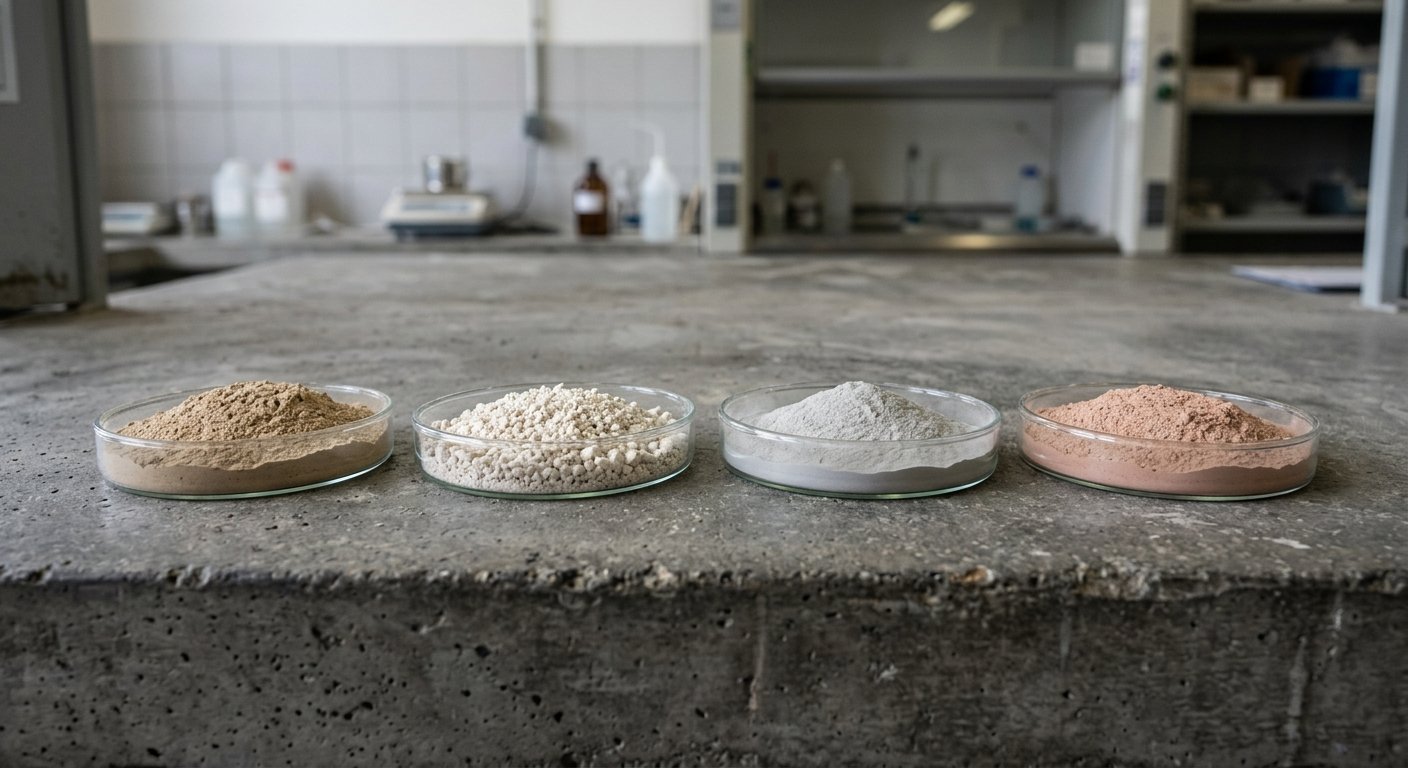
Supplementary Cementitious Materials (SCMs) sind industrielle Nebenprodukte oder aufbereitete natürliche Materialien, die Portlandzementklinker im Beton teilweise ersetzen und durch puzzolanische oder latent-hydraulische Reaktionen mit dem bei der Zementhydratation freigesetzten Calciumhydroxid zur Festigkeitsentwicklung beitragen. Die vier gängigsten SCMs sind Flugasche, Hüttensand (GGBS), Silikastaub und kalzinierter Ton; natürliche Puzzolane (Vulkansche, Opalschiefer) bilden eine fünfte Kategorie. Die meisten Mischzemente (PPC, PSC: siehe OPC vs PPC vs PSC) basieren auf diesen Stoffen.
Die zwei chemischen Familien
SCMs wirken über einen von zwei Mechanismen. Puzzolanische Materialien (Flugasche, Silikastaub, kalzinierter Ton, natürliche Puzzolane) benötigen das bei der Portlandzementhydratation freigesetzte Calciumhydroxid (Ca(OH)₂), um zusätzliches Calciumsilicathydrat (C-S-H) zu bilden. Latent-hydraulische Materialien, für die Hüttensand (GGBS) das Paradebeispiel ist, hydratisieren nach Aktivierung durch das alkalische OPC-Milieu langsam selbst. Beide Wege reduzieren den Klinkerfaktor des fertigen Bindemittels.
Puzzolanische Reaktion. Die Reaktion zwischen einem kieselsäurehaltigen oder alumosilicatischen Material und Calciumhydroxid in Gegenwart von Wasser, bei der zusätzliches C-S-H entsteht. Benannt nach der römischen vulkanischen Puzzolane aus Pozzuoli, Italien.
Der Unterschied ist für die Betonrezeptur von Bedeutung. Ein puzzolanisches SCM kann erst reagieren, wenn Alit freien Kalk freigesetzt hat; sein Festigkeitsbeitrag erfolgt daher in einer zweiten Phase, typischerweise ab dem 14. Tag bis hin zu 90–180 Tagen. Ein latent-hydraulisches SCM beginnt zu hydratisieren, sobald der pH-Wert der Porenlösung über etwa 12 steigt – also innerhalb weniger Stunden nach dem Anmischen. Sein Festigkeitsverlauf liegt daher nur ein bis zwei Tage hinter dem von OPC zurück, nicht Wochen.
Die vier (plus eins) SCMs
| SCM | Typ | Ersatzanteil | Hauptvorteil | CO₂-Einsparung vs. OPC | Quellennorm |
|---|---|---|---|---|---|
| Flugasche, Klasse F | Puzzolanisch | 15-35% | Langzeitfestigkeit, Dauerhaftigkeit | 15-30% | ASTM C618 [3]; ACI 232.2R [4] |
| Flugasche, Klasse C | Puzzolanisch + leicht zementär | 15-40% | Frühfestigkeit | 15-35% | ASTM C618 [3] |
| Hüttensand (GGBS) | Latent-hydraulisch | 30-70% (bis 95% in CEM III/C) | Niedrige Hydratationswärme, Sulfatbeständigkeit | 40-65% | ACI 233R [5]; EN 197-1 [8] |
| Silikastaub | Hochreaktives Puzzolan | 5-12% | Hohe Festigkeit, geringe Permeabilität | 5-10% | ACI 234R [6]; ASTM C1240 [7] |
| Kalzinierter Ton (LC³-50) | Puzzolanisch | bis 50% (mit Kalkstein) | CO₂-ärmstes SCM im großen Maßstab | 30-40% | ASTM C618 [3]; neue LC³-Normen |
| Natürliches Puzzolan | Puzzolanisch | 10-25% | Regionale Verfügbarkeit | 10-25% | ASTM C618 Klasse N [3]; EN 197-1 [8] |
Bereiche gemäß zitierten ACI-Ausschussberichten und Standardpraxis. CO₂-Einsparungen beziehen sich auf das Bindemittel; projektbezogene Einsparungen hängen von der Rezeptur ab.
- Flugasche ist ein Nebenprodukt aus Kohlekraftwerken, das in Elektrofiltern oder Gewebefiltern abgeschieden wird. Klasse F (typischerweise < 18% CaO, bituminöse Kohle/Anthrazit) ist der weltweite Standard; Klasse C (typischerweise > 18-20% CaO, Braunkohle/subbituminöse Kohle) wirkt leicht selbstbindend. Ein typisches Partikel der Klasse F ist eine hohle Glaskugel (Cenosphäre) mit 1-100 µm Durchmesser und einer Blaine-Oberfläche von etwa 300-450 m²/kg. Sie ist feiner als herkömmlicher OPC und verbessert bei einem Ersatz von 25-30% die Verarbeitbarkeit messbar [4].
- Hüttensand (GGBS) ist schnell in Wasser abgeschreckter, geschmolzener Hochofenschlacke, der auf Zementfeinheit gemahlen wird (typischerweise 400-500 m²/kg Blaine). Gemäß EN 197-1 [8] ist ein Ersatz von bis zu 95% in CEM III/C zulässig, wobei die europäischen Klassen CEM III/A (36-65% Schlacke) und CEM III/B (66-80% Schlacke) die Hauptstützen für den Wasser- und Massenbetonbau sind.
- Silikastaub ist kondensierter SiO₂-Rauch aus Lichtbogenöfen zur Herstellung von Silizium und Ferrosilizium. Sehr fein (BET 15-30 m²/g, Partikel 0,1-0,3 µm), hochreaktiv, Einsatz bei 7-10% Dosierung für hohe Festigkeit oder geringe Permeabilität. Ein 90-MPa-Beton enthält typischerweise 8% Silikastaub bezogen auf die Bindemittelmasse; für ein 120-MPa-Ziel kann der gleiche Mix auf 10-12% verdichtet werden [6].
- Kalzinierter Ton (Metakaolin und allgemein kaolinitische Tone) ist die aufstrebende vierte Säule. Der Ton wird bei 700-850 °C in einem Flash-Kalzinator oder Drehrohrofen kalziniert; die Zementindustrie verfügt bereits über diese Anlagen, und die Hardware für die Zement-Pyroprozessierung lässt sich direkt auf die Kalzinierung übertragen. Einsatz als eigenständiges SCM (5-20%) oder bis zu 50% Klinkerersatz in LC³-50 [9].
- Natürliche Puzzolane (Vulkansche, Opalschiefer, kalzinierte Diatomeenerde) sind die regionale Ausweichlösung, wo industrielle SCMs knapp sind. Römischer Beton bestand zu 100% aus einem Bindemittel auf Basis natürlicher Puzzolane; die Kuppel des Pantheons ist der am längsten bestehende Praxistest der Geschichte.
Leistungskompromisse in der Praxis
SCMs sind nicht austauschbar. Eine Flugasche der Klasse F bei 30% Ersatz reduziert die 1-Tages-Festigkeit im Vergleich zu einem OPC-Referenzbeton mit gleichem Bindemittelgehalt typischerweise um 15-25%, erreicht nach 28 Tagen wieder das gleiche Niveau und übertrifft es nach 90 Tagen. Ein GGBS-Mix mit 50% Schlacke verhält sich nach 7 Tagen eher wie OPC, setzt aber etwa die Hälfte der Hydratationswärme frei. 8% Silikastaub können die 28-Tage-Druckfestigkeit um 20-30% steigern und die Chloridpermeabilität um eine Größenordnung senken, versteifen jedoch den Mix und erfordern fast immer einen Fließmittelzusatz. Kalzinierter Ton wirkt synergetisch mit Kalksteinmehl: Das Aluminiumoxid des Metakaolins und das Carbonat reagieren gemeinsam zu Carboaluminatphasen, die das Porengefüge verdichten. Dies ist die chemische Grundlage, die es LC³-50 ermöglicht, die 28-Tage-Festigkeit eines 43er-OPC bei halbem Klinkerfaktor zu halten [9].
Warum SCMs für die Dekarbonisierung wichtig sind
SCMs sind der größte kurzfristige Hebel zur Senkung der CO₂-Emissionen von Zement. Die Zementherstellung verursacht jährlich etwa 2,4 Gt CO₂, was rund 7-8% der weltweiten anthropogenen Emissionen entspricht [1]. Etwa 60% davon sind prozessbedingtes CO₂ aus der Kalksteinkalzinierung; jedes Kilogramm Klinker, das durch ein SCM ersetzt wird, vermeidet ein Kilogramm Prozess-CO₂. Die GCCA Net Zero Roadmap (2021) strebt ein weltweites Klinker-Zement-Verhältnis von 0,52 bis 2050 an, gegenüber etwa 0,72 im Jahr 2020 [2]. Der Zusammenhang zwischen Phasenchemie und dem gebundenen CO₂ des ersetzten Klinkers wird im Beitrag zur chemischen Zusammensetzung von Klinker erläutert.
Zwei Versorgungsengpässe sind relevant: Das Angebot an Flugasche sinkt mit der Stilllegung von Kohlekraftwerken, wobei der weltweite Höhepunkt vor 2030 erwartet wird; das Angebot an Hüttensand ist durch die weltweite Stahlproduktion auf etwa 350-400 Millionen Tonnen pro Jahr begrenzt, was weniger als 10% des jährlichen weltweiten Bindemittelbedarfs entspricht. Der Skalierungspfad hängt daher von kalziniertem Ton und natürlichen Puzzolanen ab, die beide neue Verarbeitungskapazitäten erfordern, anstatt auf einem Nebenproduktstrom zu basieren. Die großen Zementkonzerne rüsten derzeit bestehende Ofenlinien mit Flash-Kalzinatoren nach, während die vorgelagerte Effizienz des verbleibenden Klinkers durch eine engere Kontrolle des spezifischen Brennstoffverbrauchs der Ofenlinie optimiert wird.
Common questions about this topic
Puzzolane sind eine der beiden chemischen Stoffgruppen innerhalb der SCMs (zementartige Zusatzstoffe), aber die Begriffe sind nicht austauschbar. Puzzolane (Flugasche, Silikastaub, kalzinierter Ton, natürliche Puzzolane) reagieren mit Calciumhydroxid aus der Zementhydratation unter Bildung von zusätzlichem C-S-H. Hüttensandmehl (GGBS) hingegen ist latent hydraulisch: Es hydratisiert nach einer Alkali-Aktivierung selbstständig. Somit ist Hüttensandmehl ein SCM, aber kein Puzzolan. ACI 232 behandelt Flugasche; ACI 233 behandelt Schlacke.
Die Unterteilung erfolgt gemäß ASTM C618 anhand des Calciumgehalts. In der Praxis ist Klasse F das calciumarme Puzzolan (typischerweise weniger als ca. 18 % CaO, aus Steinkohle oder Anthrazit); es wirkt rein puzzolanisch und trägt zur langfristigen Festigkeit und Dauerhaftigkeit bei. Klasse C ist die calciumreiche Asche (typischerweise über 18–20 % CaO, aus Braunkohle oder subbituminöser Kohle) und wirkt neben der puzzolanischen Eigenschaft leicht selbstbindend. Klasse C verbessert die Frühfestigkeit, kann jedoch bei Sulfatbelastung ein variables Leistungsverhalten zeigen; die Eignungsprüfung der Mischung ist daher entscheidend. Die ASTM C618 selbst differenziert die Klassen primär durch die Mindestsumme von SiO₂ + Al₂O₃ + Fe₂O₃ (70 % für Klasse F, 50 % für Klasse C).
Nein. LC³ (Kalkstein-kalzinierter Ton-Zement) ist ein Verbundzementsystem und kein einzelner Werkstoff. LC³-50 kombiniert etwa 50 % Klinker, 30 % kalzinierten Ton, 15 % Kalkstein und 5 % Gips. Kalzinierter Ton ist das SCM; der Kalkstein ist ein feines Füllmaterial, das synergistisch mit dem Aluminiumoxid des kalzinierten Tons interagiert und einen Klinkerersatz von 50 % ohne Festigkeitsverlust ermöglicht (Scrivener et al., 2018).
Sources
- IEA, *Cement, Tracking Industry 2023*. International Energy Agency
- Global Cement and Concrete Association, *Concrete Future, The GCCA 2050 Cement and Concrete Industry Roadmap for Net Zero Concrete*, 2021
- ASTM International, *ASTM C618-23, Standard Specification for Coal Ash and Raw or Calcined Natural Pozzolan for Use in Concrete*
- American Concrete Institute, *ACI 232.2R, Report on the Use of Fly Ash in Concrete* (current edition).
- American Concrete Institute, *ACI 233R, Guide to the Use of Slag Cement in Concrete and Mortar* (current edition).
- American Concrete Institute, *ACI 234R, Guide for the Use of Silica Fume in Concrete* (current edition).
- ASTM International, *ASTM C1240, Standard Specification for Silica Fume Used in Cementitious Mixtures*
- European Committee for Standardization, *EN 197-1, Cement, Part 1: Composition, specifications and conformity criteria for common cements*.
- Scrivener, K., Martirena, F., Bishnoi, S., Maity, S., *Calcined clay limestone cements (LC3)*, *Cement and Concrete Research*, 114, 49-56 (2018)
- EPFL LC³ Project. https://lc3.ch/ --- *If you are sizing a clinker-substitution or calcined-clay project on an existing kiln line, the [engineering-consulting team](/en/services/engineering-consulting) works through the process, equipment, and false-air implications on-site.*
Verwandte Artikel
Discuss Your Sealing Requirements
Our engineering team can help identify the right sealing solution for your application.
Contact Engineering Team“Überall dort, wo Hochtemperatur-Drehrohröfen unter kontrollierter Atmosphäre betrieben werden, sorgen Oswal-Dichtungssysteme für Energieeffizienz und Prozessstabilität.”