
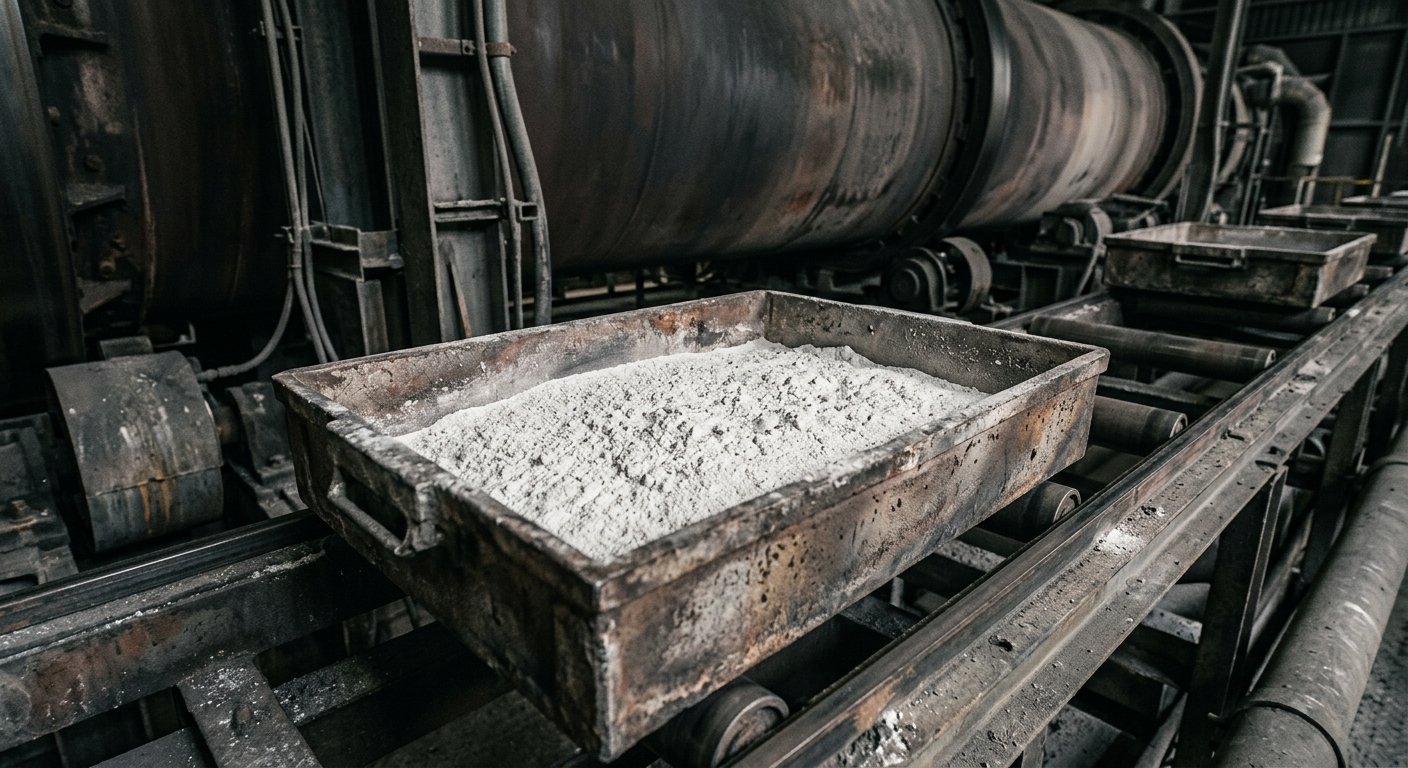
Wofür wird kalzinierte Tonerde verwendet?
Kalzinierte Tonerde (Al₂O₃) wird primär als Einsatzstoff für Aluminiumhütten (SGA) verwendet. Spezialqualitäten finden Anwendung in der Feuerfestindustrie, der Keramikherstellung, bei Schleifmitteln sowie in Polierprozessen.
Kalzinierte Tonerde (Al₂O₃) wird primär als Hüttentonerde (Smelter-Grade Alumina, SGA) verwendet, dem direkten Ausgangsstoff für Hall-Héroult-Elektrolysezellen zur Herstellung von Primäraluminium. Dies macht etwa 90–92 % des weltweiten Bedarfs an kalzinierter Tonerde aus [1]. Die restlichen 8–10 % entfallen auf hochwertige Spezialqualitäten, die in feuerfesten Erzeugnissen, technischer Keramik, Schleifmitteln, Polierpasten, Katalysatorträgern und Elektroniksubstraten eingesetzt werden.
Eine frühzeitige Klarstellung ist wichtig: Kalzinierte Tonerde ist reines Al₂O₃, das durch Erhitzen von Aluminiumhydroxid aus dem Bayer-Verfahren gewonnen wird; kalzinierter Bauxit ist ein anderes Produkt, das durch Kalzinieren von rohem Bauxiterz bei niedrigeren Temperaturen hergestellt wird und die Eisen-, Silizium- und Titanverunreinigungen des Erzes beibehält. Ihre Eigenschaften und Anwendungen überschneiden sich nicht.
Der Markt für Hüttentonerde in Zahlen
Von den jährlich etwa 135 Mio. Tonnen weltweit produzierter Tonerde [8] sind etwa 92 % Hüttenqualität [2], was bedeutet, dass die gesamte SGA-Produktion bei nahezu 125 Mio. Tonnen pro Jahr liegt. Pro Tonne Primäraluminium werden in einer Hall-Héroult-Zelle zwei Tonnen SGA verbraucht, was der weltweiten Aluminiumschmelzkapazität von etwa 70 Mio. Tonnen pro Jahr entspricht. Die dominierenden Produzenten sind China (über 50 % der weltweiten Tonerdeerzeugung), Australien, Brasilien und Indien, wobei die Raffineriekapazitäten weitgehend dem Bedarf an kostengünstiger Energie folgen, die für den wirtschaftlichen Betrieb der nachgelagerten Schmelzhütten erforderlich ist. Die Spezifikationen, nach denen SGA verkauft wird, sind streng: Na₂O-Gehalt unter etwa 0,5 %, Partikelgröße überwiegend im Bereich von 45–150 Mikrometern, geringer Feinanteil (unter 10 % kleiner als 45 Mikrometer) zur Kontrolle der Staubentwicklung in der Elektrolysezelle, BET-Oberfläche im Bereich von 60–80 m²/g zur Unterstützung der unten beschriebenen Trockenabsorption sowie ein Alpha-Phasen-Gehalt, der typischerweise unter 10 % gehalten wird, um die Löslichkeit im Kryolithbad zu gewährleisten [3].
Trockenabsorption: Die zweite Aufgabe von SGA
Ein wichtiger Punkt ist, dass SGA nicht nur der Zelle zugeführt wird; in modernen Schmelzhütten wird es zunächst durch Trockenabsorber geleitet, um als Sorptionsmittel für Fluorwasserstoffgas (HF) zu dienen, das aus den Elektrolysebädern entweicht. Die poröse Gamma-Aluminiumoxid-Oberfläche adsorbiert HF mit sehr hohem Wirkungsgrad (typischerweise über 99 %), bevor das nun fluorierte Aluminiumoxid in die Zelle gespeist wird und das Fluorid in die Badchemie zurückführt, wo es hingehört [2]. Diese Doppelfunktion (Sorptionsmittel für HF, dann Ausgangsstoff für die Elektrolyse) ist ein Grund dafür, warum Partikelgröße und Oberfläche in der SGA-Spezifikation nicht verhandelbar sind. Die richtige SGA-Qualität kontrolliert sowohl die Fluoridemissionen in die Atmosphäre als auch die elektrochemische Leistung innerhalb des Ofens.
Die Spezialqualitäten und ihre Besonderheiten
Die 8–10 % der Tonerde, die nicht an Schmelzhütten gehen, werden als eine Familie von Spezialqualitäten verkauft, die sich durch Reinheit, Alpha-Phasen-Gehalt, Kristallgröße und Morphologie unterscheiden. Die Hauptanwendungen sind feuerfeste Erzeugnisse, technische Keramik, Schleifmittel, Polierpasten, Katalysatorträger und ein kleiner, aber wachsender Markt für Elektroniksubstrate [4][5][6][7]. Kalzinierte Tonerde in Spezialqualität wird heißer kalziniert als SGA, typischerweise bei 1.200–1.400 °C gegenüber 950–1.000 °C bei Hüttenqualität, um das Material im Wesentlichen vollständig in die stabile Alpha-Phase umzuwandeln und die Kristalle auf die für den Endzweck richtige Größe wachsen zu lassen. Submikron-Polierqualitäten weisen Alpha-Aluminiumoxid-Kristalle von 0,1–0,5 Mikrometern auf; feuerfeste Qualitäten zielen auf 2–10 Mikrometer ab; Tabulartonerde (zu hohlen, rekristallisierten Aggregaten gesintert) ist ein gröberer Ausgangsstoff für monolithische feuerfeste Auskleidungen.
Der Markt für feuerfeste Erzeugnisse ist die größte Spezialanwendung. Hochtonerdehaltige feuerfeste Materialien mit 60–99 % Al₂O₃ werden in den Brennzonen von Zementöfen, Stahlpfannen, Glasofenwölbungen und Auskleidungen petrochemischer Reaktoren eingesetzt, wo sie dauerhaften Temperaturen von über 1.700 °C standhalten und gleichzeitig Alkalidämpfen, Sulfatangriffen und Schlackenerosion widerstehen müssen [4]. Insbesondere Zementwerke verbrauchen große Mengen an hochtonerdehaltigen Steinen und Gussmassen, und die Versagensmechanismen dieser Auskleidungen (Alkali-Aufblähen, Sulfat-Abplatzungen, mechanischer Verschleiß am Einlaufring) sind Teil dessen, was unter Anzeichen von Verschleiß bei feuerfesten Materialien behandelt wird.
Technische Keramik, Schleifmittel und das breite Spektrum
Technische Keramik verwendet kalzinierte Tonerde in Zusammensetzungen von 85 % Al₂O₃ (allgemeine technische Qualitäten für Pumpenauskleidungen, Ofenmöbel und Verschleißplatten) bis 99,9 % (Elektroniksubstrate, medizinische Implantate, optische Fenster) [5]. Die relevanten Eigenschaften sind eine Mohshärte von nahezu 9 (nahe Korund), ein spezifischer Durchgangswiderstand von über 10¹⁴ Ohm-cm bei Raumtemperatur, thermische Stabilität bis etwa 1.600 °C sowie chemische Beständigkeit gegenüber den meisten Säuren und Laugen. Zündkerzenisolatoren sind seit den 1930er Jahren eine Anwendung für Aluminiumoxidkeramik, und moderne Halbleiter-Prozessanlagen verwenden aus denselben Gründen hochreine Aluminiumoxidbauteile (Kammerwände, Gasverteilerplatten).
Schleifmittelanwendungen reichen von Submikron-Poliersuspensionen für die Planarisierung von Siliziumwafern bis hin zu gebundenen Schleifscheiben und Strahlmitteln [6]. Die Mohshärte von 9 ordnet Aluminiumoxid unter den kommerziell erhältlichen Schleifmitteln knapp unter kubischem Bornitrid und Diamant ein, aber seine geringeren Kosten und seine chemische Inertheit verleihen ihm den dominierenden Anteil nach Tonnage. Eisenfreie Polieranwendungen, wie die Endbearbeitung von Halbleitern und optischem Glas, setzen gezielt auf Aluminiumoxid, da herkömmliche Eisenoxid-Schleifmittel das Werkstück kontaminieren würden.
Darüber hinaus dient kalzinierte Tonerde als Katalysatorträger bei der Hydrodesulfurierung von Erdöl, als flammhemmender Füllstoff in Kunststoffen und Gummi (wobei sie beim Erhitzen gebundenes Wasser freisetzt und die Verbrennungszone kühlt) sowie als Ausgangsstoff für thermische Spritzschichten, die Turbinenkomponenten und Pumpenwellen mit einer verschleißfesten Aluminiumoxidschicht versehen [7]. Keine dieser Anwendungen erreicht mengenmäßig die Größenordnung von SGA, aber sie erzielen pro Tonne ein Vielfaches des Wertes von Standard-SGA und sind der Bereich, in dem Hersteller Margen in einem Markt erzielen, der ansonsten von Schmelzhüttenpreisen dominiert wird.
Die Brücke zum Bayer-Verfahren
Alle diese Anwendungen, von der SGA, die einer Schmelzhütte zugeführt wird, bis hin zum 0,3-Mikrometer-Alpha-Aluminiumoxid-Pulver für das optische Polieren, teilen sich eine gemeinsame vorgelagerte Chemie: Sie beginnen als Al(OH)₃, das durch das Bayer-Verfahren aus einer Natriumaluminatlauge ausgefällt wird. Der Unterschied zwischen SGA und hochreiner Spezialtonerde wird durch die Fällungsbedingungen (Kristallgröße, Ausschluss von Verunreinigungen) und durch das Kalzinierungsprofil (Temperatur, Verweilzeit, Atmosphäre) im Drehrohr- oder Wirbelschichtkalzinator bestimmt, der das Hydrat in das Oxid umwandelt. Der Kalzinator gehört zur gleichen Gerätefamilie wie Zement- oder Kalköfen, weshalb Vertikalschacht- vs. Drehrohrkalköfen und Branntkalkproduktion nützliche ergänzende Lektüren für Ingenieure sind, die mit diesen mineralverarbeitenden Öfen arbeiten.
Common questions about this topic
Hüttenaluminiumoxid (SGA) ist kalziniertes Aluminiumoxid, das gemäß den Reinheits- und physikalischen Spezifikationen hergestellt wird, die für die Aluminiumelektrolyse nach dem Hall-Héroult-Verfahren erforderlich sind; es deckt etwa 90–92 % des weltweiten Aluminiumoxidbedarfs [1][2]. In der Hall-Héroult-Zelle wird SGA in geschmolzenem Kryolith (Natriumaluminiumfluorid, Na₃AlF₆) bei etwa 950–960 °C gelöst und elektrolytisch zu flüssigem Aluminium reduziert. SGA erfüllt in der Zelle zudem eine sekundäre Funktion: Seine poröse Oberflächenstruktur adsorbiert in Trockenwäschern toxisches Fluorwasserstoffgas (HF), bevor dieses in die Atmosphäre entweichen kann [2].
In der Feuerfestindustrie wird kalzinierte Tonerde zur Herstellung von hochtonerdehaltigen Steinen, Gießmassen und monolithischen Auskleidungen für Ofeninnenräume, Ofenwände, Stahlgießpfannen und Auskleidungen petrochemischer Reaktoren verwendet [4]. Hochtonerdehaltige Feuerfestmaterialien (60–99 % Al₂O₃), die mit kalzinierter Tonerde hergestellt werden, halten dauerhaften Temperaturen von über 1.700 °C stand, widerstehen chemischen Angriffen durch Alkalien, Sulfatdämpfe sowie geschmolzene Schlacken und behalten ihre Tragfähigkeit bei erhöhten Temperaturen bei. Diese Eigenschaften machen sie zum Werkstoff der Wahl für Sinterzonen von Zementöfen, Stahlgießpfannen, Glasofenwölbungen und Nachbrennkammern von Verbrennungsanlagen.
Technische Keramiken auf Basis von kalzinierter Tonerde finden Anwendung in elektrischen Isolatoren, Zündkerzen, Schneidwerkzeugeinsätzen, biomedizinischen Implantaten sowie verschleißfesten Auskleidungen für Pumpen und Prozessanlagen [5]. Al₂O₃-Keramiken vereinen eine hohe Härte (Mohs 9, vergleichbar mit Korund), elektrische Isolationseigenschaften, thermische Stabilität bis ca. 1.600 °C sowie chemische Beständigkeit gegenüber den meisten Säuren und Laugen. Der Tonerdegehalt in technischen Keramiken reicht von 85 % (technische Standardqualitäten für Pumpenauskleidungen und Ofenbaukomponenten) bis zu 99,9 % (Hochreinheitsqualitäten für Halbleitersubstrate, medizinische Implantate und optische Präzisionsbauteile).
Kalzinierte Tonerde wird in Schleifscheiben, beschichteten Schleifbändern, Strahlmitteln sowie Polierpasten für optische Linsen, Festplatten und metallische Präzisionsoberflächen verwendet [6]. Mit einer Mohshärte von etwa 9 zählt sie nach Diamant und kubischem Bornitrid zu den härtesten kommerziell erhältlichen Schleifmitteln. Submikron-Polierqualitäten werden kalziniert und auf eine Kristallgröße von 0,1–0,5 µm gemahlen; gröbere Schleifqualitäten verwenden größere Aggregate. Aufgrund ihrer chemischen Inertheit ist sie eine kontaminationsfreie Wahl für Anwendungen, bei denen Eisenverunreinigungen durch herkömmliche Schleifmittel inakzeptabel sind, wie beispielsweise beim Polieren von Halbleiterwafern.
Neben der Verwendung in der Verhüttung, bei feuerfesten Werkstoffen, Keramiken und Schleifmitteln dient kalziniertes Aluminiumoxid als Katalysatorträger in der Erdölraffination (Hydrodesulfurierung), als flammhemmender Füllstoff in Kunststoffen und Kautschuk (durch die Freisetzung von Wasser bei Erhitzung kühlt es die Verbrennungszone) sowie als thermisches Spritzpulver für verschleißfeste Oberflächenbeschichtungen von Industriekomponenten [7]. Diese Spezialanwendungen machen zwar nur einen geringen Anteil der gesamten Aluminiumoxidnachfrage aus, erzielen jedoch einen deutlichen Preisaufschlag gegenüber handelsüblichem metallurgischem Aluminiumoxid (SGA).
Sources
- SpringerLink, "Production of Smelter Grade Alumina (SGA) by Calcination," in *Proceedings of the 50th Annual Conference of Metallurgists* (2011)
- Verified Market Reports, "Smelter Grade Alumina (SGA) Market Size, Research and Forecast 2033" (92% demand share figure)
- ResearchGate, "Key Physical Properties of Smelter Grade Alumina."
- DOMILL Abrasive, "What is Calcined Alumina Used For?"
- Wundermold, "7 Grades of Alumina Ceramics."
- Bluestone Metals and Chemicals, "Calcined Alumina."
- Banlanchem, "Alumina Products: Industrial Applications, Types, and Properties."
- U.S. Geological Survey, *Mineral Commodity Summaries 2026: Bauxite and Alumina*
Verwandte Artikel
Discuss Your Sealing Requirements
Our engineering team can help identify the right sealing solution for your application.
Contact Engineering Team“Überall dort, wo Hochtemperatur-Drehrohröfen unter kontrollierter Atmosphäre betrieben werden, sorgen Oswal-Dichtungssysteme für Energieeffizienz und Prozessstabilität.”