
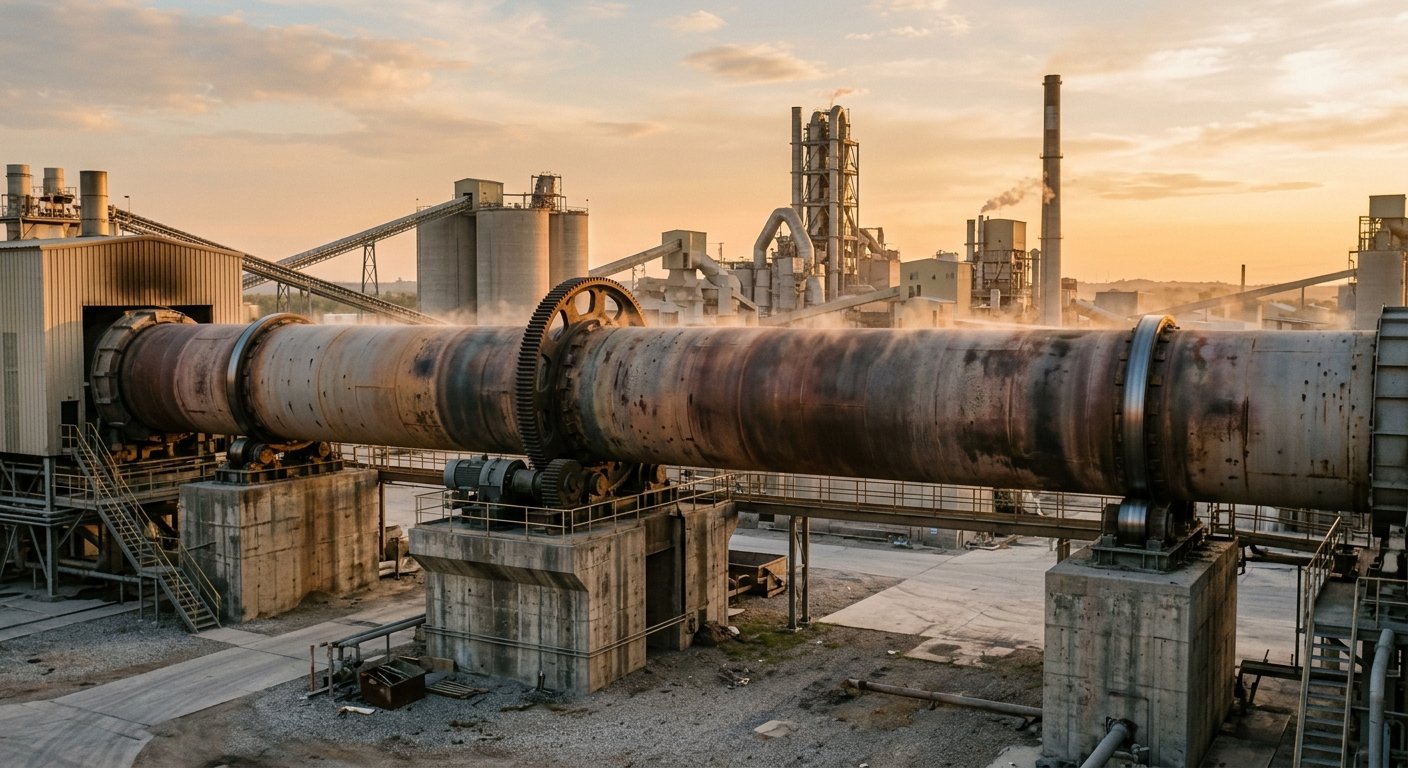
Consumo specifico di calore in un forno da cemento
Il consumo specifico di calore (SHC - Specific Heat Consumption) rappresenta l'energia termica richiesta per kg di clinker. Formula, parametri di riferimento in base alla tipologia di processo e strategie di riduzione.
Il consumo specifico di calore (Specific Heat Consumption, SHC) è l'energia termica totale richiesta per produrre un chilogrammo di clinker in un forno da cemento, espressa in kcal/kg di clinker o GJ/t di clinker. Rappresenta il quadro termodinamico per la valutazione dell'efficienza del forno e la variabile che determina la voce di costo del combustibile di ogni impianto. Questo articolo definisce l'SHC, lo distingue dal spesso confuso consumo specifico di combustibile (Specific Fuel Consumption, SFC), analizza il bilancio termico e quantifica il valore di una tipica riduzione.
Cosa misura il consumo specifico di calore
Il consumo specifico di calore è il calore consumato dal processo di formazione del clinker e dalle inevitabili perdite ad esso correlate, riferito al chilogrammo di clinker prodotto. Viene convenzionalmente misurato sulla base del potere calorifico inferiore (PCI), a secco, con 1 GJ/t di clinker = 239 kcal/kg di clinker (1 kcal = 4,184 kJ).
L'SHC medio ponderato dell'industria cementiera globale è di circa 3,4-3,5 GJ/t di clinker (~810-840 kcal/kg) secondo il database "Getting the Numbers Right" (GNR) della Global Cement and Concrete Association [1]. Tale cifra riflette il mix globale di capacità produttiva moderna a via secca, semi-secca e la restante capacità a via umida. Gli impianti migliori della categoria operano ben al di sotto di questi valori.
Consumo specifico di calore (SHC): l'energia termica totale consumata per chilogrammo di clinker, che tiene conto del calore teorico di formazione del clinker più le perdite misurate (gas di scarico del preriscaldatore, scarico del raffreddatore, irraggiamento del mantello del forno, perdite di polveri). Unità: kcal/kg di clinker o GJ/t di clinker. Convenzionalmente riportato su base secca, riferito al potere calorifico inferiore.
SHC vs SFC: la distinzione necessaria
SHC e consumo specifico di combustibile (SFC) sono spesso usati in modo intercambiabile nei report di impianto, ma non sono identici: l'SFC è l'input di energia del combustibile per kg di clinker, mentre l'SHC è l'energia termica effettivamente consumata dal processo (fabbisogno termico teorico più perdite misurate). In un impianto ben strumentato i due valori convergono; un divario persistente tra loro segnala errori di misurazione o di contabilizzazione.
| Termine | Cosa misura | Unità tipica |
|---|---|---|
| Consumo specifico di combustibile (SFC) | Input di energia del combustibile per kg di clinker (lato bruciatore) | kcal/kg clinker, GJ/t clinker |
| Consumo specifico di calore (SHC) | Calore consumato dal processo per kg di clinker (lato processo) | kcal/kg clinker, GJ/t clinker |
| Consumo di energia termica | Sinonimo di SHC nei report IEA / GCCA | GJ/t clinker |
| Intensità energetica (cemento) | Energia totale (termica + elettrica) per t di cemento, non per t di clinker | GJ/t cemento, kWh/t cemento |
L'SFC indica all'operatore quanto combustibile è stato bruciato. L'SHC indica all'operatore dove è andato il calore. Cembureau e la IEA Cement Technology Roadmap utilizzano entrambi l'SHC (o il suo sinonimo "consumo di energia termica") come variabile di riferimento principale [2][3]. Madlool et al. (2011) in Renewable and Sustainable Energy Reviews rimane il riferimento peer-reviewed più citato per l'analisi del bilancio termico degli impianti di cemento [4].
Il bilancio termico: dove vanno le kcal
Un moderno forno da cemento a via secca consuma ~700 kcal/kg di clinker, di cui ~420 kcal/kg rappresentano il calore teorico di formazione del clinker e il resto è costituito da perdite attraverso i gas del preriscaldatore, lo scarico del raffreddatore, l'irraggiamento del mantello del forno e le polveri [4][5][6]. Il limite di ~420 kcal/kg è il minimo termodinamico: è dominato dall'endotermia della decomposizione del calcare (CaCO₃ → CaO + CO₂, ~1.780 kJ per kg di CaCO₃ decomposto, derivato da un'entalpia di reazione standard di 178 kJ/mol), con contributi minori dalla deidrossilazione dell'argilla, dalla formazione di alite/belite e dal preriscaldamento della farina cruda.
Ripartizione tipica delle perdite per un forno a 5 stadi con preriscaldatore + precalcinatore a ~720 kcal/kg di clinker:
| Componente del bilancio termico | kcal/kg tipiche | % del totale |
|---|---|---|
| Calore teorico di formazione del clinker | ~420 | ~58% |
| Gas in uscita dal preriscaldatore | 150-200 | 21-28% |
| Scarico del raffreddatore | 80-130 | 11-18% |
| Irraggiamento e convezione del mantello del forno | 30-50 | 4-7% |
| Polveri di bypass (se presente) | 10-30 | 1-4% |
| Altro (calore sensibile del clinker, umidità farina cruda, vario) | 20-40 | 3-6% |
Fonte: composizione della metodologia Holderbank Cement Course Vol 2, Madlool et al. (2011) e report tecnici ECRA [4][6][7]. I bilanci dei singoli impianti varieranno; la tabella è rappresentativa.
Il limite di ~420 kcal/kg è invalicabile. Le restanti ~230-300 kcal/kg di perdite rappresentano l'ambito in cui operano gli interventi ingegneristici.
Benchmark SHC per tipo di processo
Gli intervalli tipici di SHC variano da ~690 kcal/kg per i moderni forni a via secca con precalcinatore fino a ~1.400 kcal/kg per i vecchi forni a via umida. L'intervallo riflette il numero di stadi del preriscaldatore, la presenza del calcinatore, la tecnologia del raffreddatore e la penalità termica dovuta alla rimozione dell'umidità nei processi semi-secchi e a umido.
| Tipo di processo | SHC tipico (kcal/kg clinker) | Equivalente (GJ/t clinker) | Fonte |
|---|---|---|---|
| Moderno a via secca, 5/6 stadi + precalcinatore | 690-750 | 2,9-3,1 | Cembureau, IEA [2][3] |
| Moderno a via secca, best-in-class | ~650 | ~2,7 | ECRA "Catalogue of Best Practices" [6] |
| A via secca, 4 stadi (senza precalcinatore) | 750-820 | 3,1-3,4 | Madlool et al. (2011) [4] |
| Semi-secco / Forni a griglia Lepol | 800-950 | 3,3-4,0 | Madlool et al. (2011) [4] |
| A via umida (capacità storica / residua) | 1.100-1.400 | 4,6-5,9 | Baseline storica IEA [3] |
| Media ponderata industria globale (2023) | ~810-840 | 3,4-3,5 | GCCA GNR [1] |
Il divario tra il best-in-class (~650 kcal/kg) e il limite teorico di ~420 kcal/kg, pari a ~230 kcal/kg, è l'involucro di perdite irriducibili determinato dalle temperature dei gas in uscita, dalla temperatura di scarico del raffreddatore e dall'irraggiamento del mantello del forno. Nessun forno commercialmente operativo ha superato tale limite.
Come ridurre l'SHC
Le cinque leve comprovate sono: aumentare gli stadi del preriscaldatore, ottimizzare il recupero del raffreddatore di clinker, eliminare le infiltrazioni di aria parassita, installare o aggiornare un precalcinatore e recuperare il calore di scarto.
-
Stadi del preriscaldatore. Ogni stadio aggiunto riduce le perdite dei gas in uscita dal preriscaldatore di ~20-30 kcal/kg estraendo più calore sensibile dai gas di scarico verso la farina cruda discendente [4][6]. Le moderne torri di preriscaldamento a 5 e 6 stadi operano vicino al limite pratico; oltre tale soglia, le perdite di carico e i costi di capitale non giustificano ulteriori stadi.
-
Recupero del raffreddatore. I moderni raffreddatori a griglia ad alta efficienza recuperano ~75-80% del calore sensibile del clinker nell'aria secondaria e terziaria; i vecchi raffreddatori planetari possono recuperare meno del 60% [4]. Il divario è di 30-60 kcal/kg di fabbisogno di combustibile aggiuntivo che un aggiornamento del raffreddatore elimina.
-
Controllo dell'aria parassita. Ogni punto percentuale di aria parassita oltre la baseline aggiunge kcal/kg misurabili: il ventilatore ID sposta più gas parassita, i cicloni del preriscaldatore perdono efficienza di raccolta e il bilancio termico viene degradato dalla diluizione con aria fredda. Gli interventi di retrofit per il controllo dell'aria parassita forniscono tipicamente una riduzione dell'SHC di 15-35 kcal/kg negli impianti con baseline elevate.
-
Aggiornamento del precalcinatore. L'aggiunta di un precalcinatore sposta ~60% dell'input di combustibile all'esterno del tubo del forno rotante, riducendo le perdite per irraggiamento del mantello, consentendo una maggiore capacità a carico termico inferiore e migliorando il controllo della combustione. È la leva di progettazione di processo più importante su un forno senza precalcinatore.
-
Recupero del calore di scarto (WHR). I sistemi WHR a ciclo Rankine a vapore o ORC sugli scarichi del preriscaldatore e del raffreddatore convertono il calore altrimenti perso in 4-9 MW di potenza elettrica per un forno da 5.000 t/giorno [3]. Il WHR non riduce direttamente l'SHC (il calore esce comunque dal forno) ma riduce il costo dell'energia acquistata.
Il valore di una riduzione di 50 kcal/kg
Su un forno da 5.000 t/giorno, una riduzione di 50 kcal/kg nell'SHC consente un risparmio di circa 3,8 milioni di euro all'anno con un costo del combustibile consegnato di 40 €/MWh (~2,9 milioni di euro con un'ipotesi più conservativa di 30 €/MWh).
Il calcolo:
Energia risparmiata = 50 kcal/kg × 5.000.000 kg/giorno = 250 Gcal/giorno
                    = 250 × 1,163 MWh/Gcal = 290,8 MWh/giorno
Annuale (330 giorni, 40 €/MWh) = 290,8 × 330 × 40 = 3,84 milioni di €/anno
| Variabile | Valore | Note |
|---|---|---|
| Capacità forno | 5.000 t clinker/giorno | Tipico forno a linea singola di medie dimensioni |
| Riduzione SHC | 50 kcal/kg | Risultato di fascia media per un retrofit singolo |
| Giorni operativi | 330/anno | Ipotesi di disponibilità standard |
| Costo combustibile consegnato | 40 €/MWh | Mix UE carbone + combustibili alternativi, 2023-25 [2][3] |
| Risparmio annuale | ~3,8 milioni di € | Al lordo delle imposte, solo costo combustibile |
Il ritorno sull'investimento (payback) per la maggior parte degli interventi di riduzione dell'SHC è inferiore a tre anni. I retrofit per il controllo dell'aria parassita su impianti con baseline elevate spesso si ripagano in meno di 18 mesi: il difetto di SHC sottostante è significativo e l'intensità di capitale per la sigillatura è relativamente bassa. I risparmi di CO₂ e di energia elettrica del ventilatore ID accorciano ulteriormente il tempo di rientro.
Common questions about this topic
SHC è l'energia termica consumata dal processo per kg di clinker (lato processo). SFC è l'energia del combustibile immessa per kg di clinker (lato bruciatore). In un impianto ben strumentato i due valori convergono; un divario persistente indica un errore di misurazione o di contabilizzazione. Per la guida sul SFC, consultare Specific Fuel Consumption in Cement Kilns.
Un moderno forno a 5 o 6 stadi con preriscaldatore e precalcinatore opera a 690-750 kcal/kg di clinker; gli impianti di eccellenza raggiungono circa 650 kcal/kg [2][6]. I forni a secco più datati a 4 stadi si attestano su 750-820 kcal/kg; i forni semisecco e Lepol su 800-950 kcal/kg; i processi a umido su 1.100-1.400 kcal/kg [4].
No. Il calore teorico di formazione del clinker è di circa 420 kcal/kg di clinker [5][6], determinato dalla termodinamica della decomposizione del calcare, della deidrossilazione dell'argilla e della formazione dei minerali del clinker. Il divario di circa 230 kcal/kg tra gli impianti all'avanguardia e tale limite minimo rappresenta l'inviluppo delle perdite irriducibili derivanti dalle temperature dei gas in uscita, dallo scarico del raffreddatore e dall'irraggiamento del mantello del forno. Gli interventi riducono tale scarto, ma non possono colmarlo.
Nei rapporti di IEA, Cembureau e GCCA, il "consumo di energia termica" è un sinonimo diretto di SHC, espresso in GJ/t di clinker [1][2][3]. L'"intensità energetica" è un concetto più ampio che include l'energia elettrica (kWh/t di cemento); non si tratta della stessa variabile.
Sources
- Global Cement and Concrete Association (GCCA), *Getting the Numbers Right (GNR) Database*, 2023 reporting year
- Cembureau, *Activity Report 2023*. European cement industry baseline figures including thermal energy consumption
- International Energy Agency (IEA), *Cement Technology Roadmap* and subsequent updates
- Madlool, N.A., Saidur, R., Hossain, M.S., Rahim, N.A., *A critical review on energy use and savings in the cement industries*, Renewable and Sustainable Energy Reviews, 15(4), pp. 2042-2060, 2011
- Taylor, H.F.W., *Cement Chemistry*, 2nd edition, Thomas Telford, 1997. Canonical reference for clinker formation thermochemistry, including the limestone calcination endotherm.
- European Cement Research Academy (ECRA), *Technical Reports* and *Catalogue of Best Practices*
- Holderbank Group (Holcim), *Cement Manufacturing: Process Technology*, Volume 2, Holderbank Cement Course. Industry-standard training reference for kiln heat balance methodology. --- *Benchmarking a specific kiln's SHC, identifying where the kcal go, and prioritising the retrofit interventions that deliver the largest reduction per euro of capital are within the standard scope of Oswal's [engineering-consulting service](/en/services/engineering-consulting). For [cement plants](/en/industries/cement) auditing heat balance against the benchmarks above, the methodology is the same on-site as it is in this piece.*
Articoli correlati
Discuss Your Sealing Requirements
Our engineering team can help identify the right sealing solution for your application.
Contact Engineering Team“Ovunque i forni rotanti ad alta temperatura operino in atmosfera controllata, i sistemi di tenuta Oswal garantiscono efficienza energetica e stabilità di processo.”