
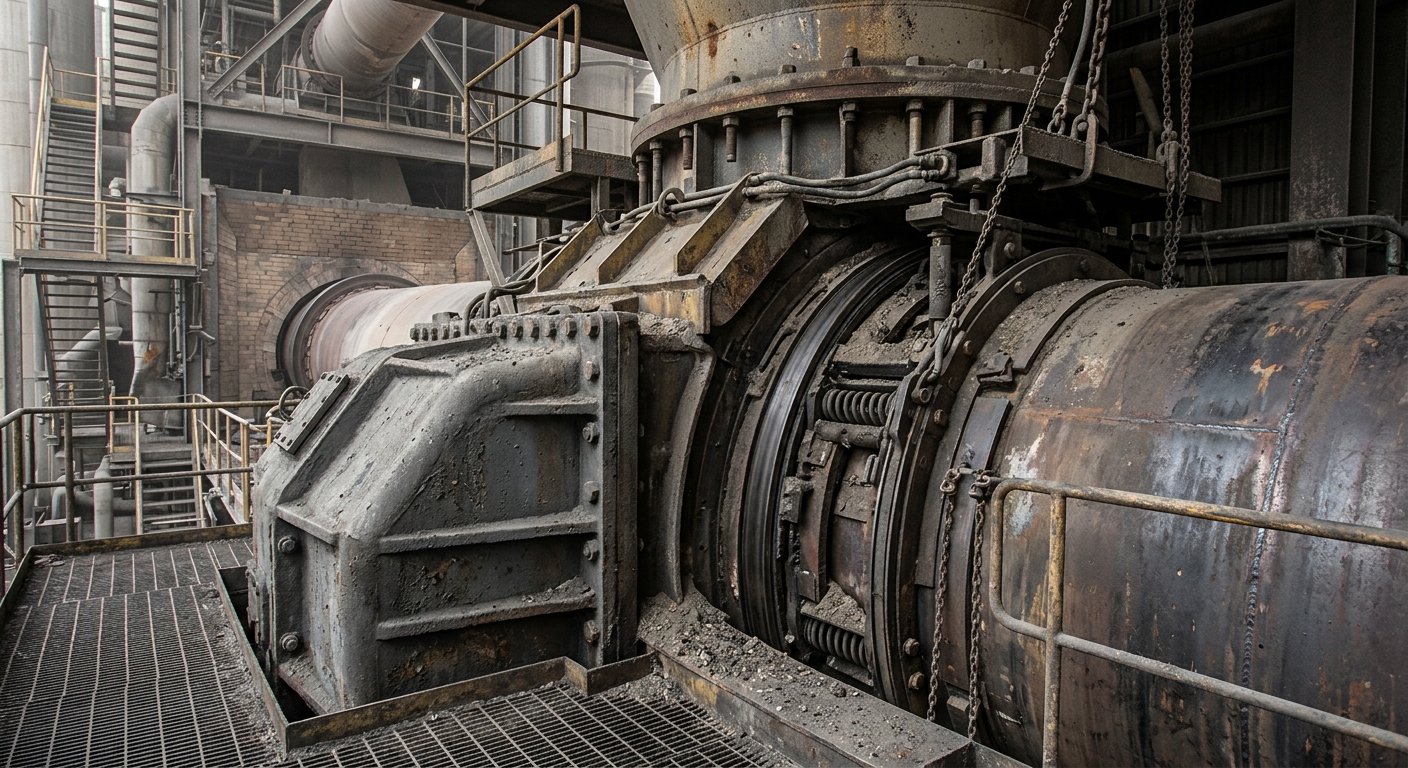
Inspektion der Ofendichtung: Turnus und Methodik
Inspektionsintervalle für Ofendichtungen und zu prüfende Parameter. Tägliche, wöchentliche und während des Stillstands durchzuführende Kontrollen; vierstufige Verschleißklassifizierung; Grenzwerte für Falschluft pro Stufe.
Eine Inspektion der Ofendichtungen sollte täglich (Sichtprüfung), wöchentlich (protokollierte Prüfung) und bei jedem geplanten Stillstand (manuelle Begutachtung) durchgeführt werden. Diese drei Intervalle decken das gesamte Spektrum der Verschleißerscheinungen ab, bevor diese zu Falschluftproblemen führen. Dieser Artikel erläutert den Inspektionsplan, den schrittweisen Ablauf während eines Stillstands sowie das vierstufige Verschleißbewertungssystem, das visuelle Befunde in Instandhaltungsentscheidungen überführt.
Warum der Zustand der Ofendichtung Falschluft und Brennstoffkosten beeinflusst
Die Ein- und Auslaufdichtungen des Drehrohrofens sind für 60–75 % der gesamten Falschluftinfiltration in einem Zementwerk verantwortlich. Jedes Prozent Falschluft über dem Basiswert führt zu einem Mehrverbrauch von etwa 3 kcal/kg Klinker [1][2]. Bei einem Ofen mit einer Kapazität von 5.000 t/Tag und einem spezifischen Wärmeverbrauch von 720 kcal/kg stellt ein Dichtungspaar im Zustand C (4–6 % Falschluft allein durch die Dichtungen) einen messbaren Anteil der gesamten Brennstoffkosten dar, der sich täglich summiert.
Falschluft: Luft, die durch unbeabsichtigte Öffnungen (Dichtungen, Übergänge zum Einlaufgehäuse, Inspektionsöffnungen) in das Drehrohrofen-System gesaugt wird, anstatt den kontrollierten Verbrennungsluftpfad zu durchlaufen. Die Quantifizierung erfolgt als Prozentsatz der gesamten Verbrennungsluft. Ausführliche Informationen finden Sie unter Falschluft in Zementöfen.
Der Zustand der Dichtungen ist eine der am stärksten vernachlässigten Variablen in der Pyroprozesslinie. Die meisten Werke protokollieren diesen nur bei jährlichen Stillständen und betrachten ihn eher als Sichtprüfung denn als bewertete, aufgezeichnete Messgröße, die mit dem O₂-Trend korreliert. Oswals System zur integrierten Falschluftkontrolle basiert auf dem Prinzip, dass der Dichtungszustand und die Falschluftmessung gemeinsam und nicht unabhängig voneinander verfolgt werden müssen.
Inspektionsintervalle: täglich, wöchentlich und bei Stillstand
Drei Inspektionsstufen entsprechen drei verschiedenen Fehlerarten: betriebsbedingter Verschleiß (täglich), fortschreitende Degradation (wöchentlich) sowie strukturelle oder feuerfeste Schäden (Stillstand).
| Stufe | Häufigkeit | Methode | Erfasste Probleme |
|---|---|---|---|
| Täglich | Jede Schicht | Visueller Rundgang am Ein- und Auslauf; auf hörbares Einströmen von Luft oder Staubaustritt achten | Stufe D-Ereignisse; plötzlicher Verschleiß; Staubaustritt am Einlaufgehäuse |
| Wöchentlich | Einmal pro Woche | Protokollierte Prüfung; O₂-Gehalt am Ofeneinlauf vs. Basiswert; Prüfung auf Hotspots am Gehäuse | Beginn Stufe C; schleichender Falschluftanstieg, der äußerlich nicht sichtbar ist |
| Stillstand | Jeder geplante Stopp | Vollständige manuelle Begutachtung: Prüfung der Kontaktflächen, Kontrolle der Gegengewichte, Messung mit Fühlerlehre, Überprüfung der feuerfesten Auskleidung | Dokumentation des Basiswerts Stufe A/B; strukturelle Schäden oder Ausrichtungsfehler; Abplatzungen der Ausmauerung |
Das Stillstandsintervall hängt vom Ofentyp und Prozess ab. Zementöfen im Trockenverfahren planen in der Regel alle 12–18 Monate einen größeren Stillstand [3]. DRI- und Kalköfen mit kürzeren Kampagnenzyklen stoppen möglicherweise alle 6–12 Monate. Unabhängig vom Intervall sollte die vollständige Dichtungsprüfung bei jedem Stopp durchgeführt werden, nicht nur bei jährlichen Überholungen.
Ablauf einer Ofendichtungsinspektion
Eine Dichtungsinspektion während des Stillstands folgt einem festen Ablauf: Isolieren, Zugang schaffen, Kontaktgeometrie messen, Verschleiß einstufen, protokollieren und entscheiden.
-
Isolieren und Abkühlen. Sicherstellen, dass der Ofen stillsteht und der Dichtungsbereich unter der für den Dichtungstyp sicheren Zugangstemperatur liegt. Den Ofenantrieb sperren (Lock-out) und dies mit der Messwarte (CCR) bestätigen.
-
O₂-Basiswert vor dem Stillstand aufzeichnen. Vor dem Öffnen von Inspektionsluken den 72-Stunden-O₂-Trend am Ofenein- und -auslauf aus dem Historian abrufen. Der aus diesem Trend berechnete Falschluftwert ist die funktionale Einstufung; die nachfolgende Sichtprüfung bestätigt den Mechanismus.
-
Kontaktfläche inspizieren. Inspektionsluken entfernen und Lamellenspitzen oder Graphitblockflächen auf Verschleißmuster untersuchen. Prüfen, ob der Verschleiß über den Umfang gleichmäßig ist (normaler Betrieb) oder ungleichmäßig (weist auf Ofenovalität oder Wellenversatz hin, was den Verschleiß an einer Stelle beschleunigt und die gegenüberliegende Seite entlastet).
-
Gegengewichte und Federspannung prüfen. Sicherstellen, dass das Gewichts- oder Federsystem über den gesamten Umfang einen gleichmäßigen Anpressdruck ausübt. Durchhängende oder lockere Gegengewichte sind der früheste strukturelle Indikator für den Übergang zu Stufe B und können bei rechtzeitigem Erkennen ohne Dichtungsaustausch korrigiert werden.
-
Spaltmaße messen. Wo Lücken zwischen Dichtungsfläche und rotierendem Ofenmantel sichtbar sind, mit einer Fühlerlehre messen. Als praktischer Schwellenwert gilt: Lücken über mehr als 20 % des Umfangs deuten auf Stufe C oder höher hin und sollten einen Austauschplan auslösen. Dies ist eine Instandhaltungsheuristik, keine offizielle OEM-Toleranz; bitte mit den Spezifikationen des Dichtungsherstellers für Ihre Anlage abgleichen.
-
Schnittstelle zwischen Ausmauerung und Gehäuse inspizieren. Auf Staubspuren (schwarze Streifen am Gehäuse nahe der Dichtung), Erosion des Dichtungsträgers oder Abplatzungen der Ausmauerung achten, die den Spalt überbrücken. Im Spalt festsitzendes Material beschleunigt sowohl den Verschleiß als auch die Ringbildung am Ofeneinlauf. Für den weiteren Kontext der feuerfesten Degradation siehe Anzeichen von Verschleiß an der feuerfesten Auskleidung.
-
Einstufen und protokollieren. Einen Verschleißgrad (A bis D) gemäß der Tabelle im nächsten Abschnitt zuweisen. Im Instandhaltungsmanagementsystem mit Datum, Ofenposition (Einlauf/Auslauf), Foto der Verschleißzone und dem O₂-Basiswert vor dem Stillstand erfassen.
-
Entscheiden und planen. Stufe A oder B: Wiederinbetriebnahme. Stufe C: Arbeitsauftrag für Dichtungsaustausch beim nächsten geplanten Stopp erstellen. Stufe D: Als kritischen Defekt behandeln; Austausch nicht aufschieben.
Verschleißstufen-Bewertung
Die Einstufung der Dichtung bei jeder Inspektion wandelt eine subjektive Sichtprüfung in eine handlungsorientierte Instandhaltungsentscheidung um.
| Stufe | Beobachteter Zustand | Falschluft durch Dichtung | Erforderliche Maßnahme |
|---|---|---|---|
| A: Nominal | Voller Anpressdruck; Elemente ausgerichtet; Gegengewichte ausbalanciert | <1 % | Keine; protokollieren und weiterbetreiben |
| B: Überwachen | Sichtbarer Kantenverschleiß an Lamellen oder leichte Graphitblockerosion; Gegengewichte ggf. nachspannen | 2–3 % | Protokollieren; wöchentlich überwachen; für nächsten Stopp planen |
| C: Austausch planen | Spaltmaße sichtbar; ungleichmäßiger Verschleiß durch Ovalität/Versatz; Hotspots am Gehäuse | 4–6 % | Austausch beim nächsten geplanten Stillstand einplanen |
| D: Kritisch | Staubaustritt sichtbar; hörbares Einströmen; erhöhte Gehäusetemperatur; O₂-Trend bestätigt Falschluft >7 % | >7 % | Bei nächster Gelegenheit austauschen; nicht aufschieben |
Der Betrieb in Stufe C führt zu einem Brennstoff-Mehrverbrauch von 12–18 kcal/kg Klinker im Vergleich zu einer nominalen Dichtung (basierend auf 3 kcal/kg pro 1 % Falschluft [2]). Bei einem 5.000 t/Tag-Ofen und Brennstoffkosten von 40 €/MWh entspricht dies etwa 1,2–1,8 Millionen Euro vermeidbaren Kosten pro Jahr. Stufe D verdoppelt diesen Wert in etwa.
Spezifische Inspektionshinweise nach Dichtungstyp
Lamellendichtungen (Fischschuppendichtungen) und Graphitblockdichtungen versagen unterschiedlich und erfordern bei der Inspektion verschiedene Schwerpunkte.
Lamellendichtungen: Auf herabhängende, fehlende oder gerissene Lamellen prüfen; ungleichmäßiger Anpressdruck durch gebrochene oder geschwächte Blattfedern; Materialrückfluss, der durch die Dichtung in Richtung Aufgabeseite entweicht. Graphitstaub vermischt mit Klinker am Gehäusefuß ist ein sekundärer Indikator für Lamellenschäden, nicht für Graphitverschleiß. Oswals Duplex-Ofendichtungssystem kombiniert Lamellen- und Graphitstufen in Reihe; jede Stufe bei Stillstand separat inspizieren und getrennt bewerten.
Graphitdichtungen: Die Blockflächen auf Fragmentierung (herausgebrochene Stücke, nicht nur Oberflächenerosion) und auf eine asymmetrische Verschleißrille entlang des Umfangs prüfen (deutet auf axialen Versatz hin; eine gleichmäßig tiefe Rille ist zu erwarten). Der Verlust des federbelasteten Kontakts in einem beliebigen Sektor entspricht einem Befund der Stufe B, selbst wenn der Falschluftwert noch niedrig ist. Graphitdichtungen halten in der Regel 3–5 Jahre, Lamellendichtungen 2–3 Jahre [4][5]. Beide Werte sind zustandsabhängig: Anlagen ohne konsequentes Nachspannungsprogramm erreichen den Austauschzustand schneller.
Verknüpfung der Inspektionsergebnisse mit dem Falschluft-Basiswert
Inspektionsergebnisse werden erst dann handlungsrelevant, wenn sie mit einem gemessenen Falschluft-Basiswert aus dem O₂-Trend am Ofenein- und -auslauf kombiniert werden. Eine bei der Sichtprüfung als Stufe B eingestufte Dichtung mit einem stabilen O₂-Wert von unter 1 % Falschluft kann besser sein, als sie aussieht. Eine Dichtung, die äußerlich intakt erscheint, aber 3–4 % Falschluft aufweist, hat wahrscheinlich einen internen Leckagepfad, der an der Kontaktfläche nicht sichtbar ist. Die visuelle Einstufung und die O₂-Messung müssen abgeglichen werden, anstatt sie als zwei separate Datensätze zu behandeln.
Die Methodik zur Umrechnung von O₂-Werten in Falschluftprozentsätze ist unter Wie Falschluft in einem Zementofen gemessen wird dargelegt. Oswals Wartungs- und Inspektionsservice integriert die Zustandsbewertung der Dichtungen mit dem O₂-Trend in ein einziges Inspektionsprotokoll, sodass beide Datenströme bei jedem Inspektionsereignis verknüpft und nicht in getrennten Systemen gespeichert werden.
Common questions about this topic
Ofendichtungen sollten in drei Intervallen überprüft werden: eine visuelle Sichtkontrolle in jeder Betriebsschicht, eine protokollierte wöchentliche Inspektion, bei der der O₂-Gehalt gegen den festgelegten Referenzwert aufgezeichnet wird, und eine vollständige physische Begutachtung bei jedem geplanten Ofenstillstand. Bei Zementöfen im Trockenverfahren liegt das Stillstandsintervall üblicherweise bei 12–18 Monaten; DRI- und Kalköfen werden in der Regel alle 6–12 Monate abgeschaltet. Die wöchentliche O₂-Prüfung ist die am häufigsten ausgelassene Ebene, obwohl sie die früheste Warnung vor einem Fortschreiten der Stufe C zwischen den Stillständen liefert. Informationen zur O₂-Messmethode finden Sie unter Wie Falschluft gemessen wird.
Falschluft an der Dichtungsstelle von über 7 % (Stufe D) erfordert einen Austausch bei der nächsten Gelegenheit und darf nicht aufgeschoben werden [1][2]. Bei Werten zwischen 4–6 % (Stufe C) ist der Austausch für den nächsten geplanten Hauptstillstand vorzusehen und umgehend ein Arbeitsauftrag zu erstellen, damit Ersatzteile und Personal zum Stillstandstermin bereitstehen. Unter 3 % (Stufe B) ist der Befund zu protokollieren und die wöchentliche Überwachungsfrequenz zu erhöhen, bis der nächste Stillstand eine vollständige Bewertung ermöglicht. Die Einstufung erfordert sowohl den visuellen Befund als auch den O₂-basierten Falschluftwert; bei Unstimmigkeiten zwischen beiden ist eine weitere Untersuchung erforderlich, bevor die niedrigere Einstufung akzeptiert wird.
Graphitblockdichtungen erreichen in der Regel Standzeiten von 3 bis 5 Jahren zwischen den Austauschintervallen; Fischschuppen-Lamellendichtungen liegen bei 2 bis 3 Jahren, was die höhere Verschleißfestigkeit von Graphit an der Kontaktfläche widerspiegelt [4][5]. Die tatsächliche Lebensdauer hängt von der Drehzahl des Ofens, der Betriebstemperatur, dem Grad der Ofenrohr-Ovalität sowie der konsequenten Einhaltung des Inspektions- und Nachspannprogramms ab. Bei von uns auditierten Nachrüstungen weisen Dichtungen, die über ihre nominelle Lebensdauer hinaus betrieben wurden, bei der ersten Inspektion häufig den Zustand Stufe C oder D auf, wobei Falschluftwerte durch kompensierende Anpassungen an anderer Stelle im Verbrennungssystem maskiert wurden.
Sources
- INFINITY for Cement Equipment, *Kiln Inlet & Outlet Seal, Kiln Thrust Roller & Kiln Maintenance Check*. Holderbank-derived cement plant operation training corpus, covering seal inspection practice and false-air contribution by source
- Seal Plus, *False Air in the Cement Manufacturing Process*, 2024. Technical white paper on false-air sources, proportional contribution of kiln inlet and outlet seals (60-75% of plant total), and energy penalty (3 kcal/kg per 1% false air)
- INFINITY for Cement Equipment, *Mechanical Kiln Inspection: Systematic Condition Monitoring for Rotary Kilns*
- IKN GmbH, *IKN Graphite Outlet Seal* (product literature). Covers graphite seal design, inspection requirements, and expected service characteristics
- Oxmaint, *Kiln Inlet and Outlet Seal Maintenance for Cement Plants*. Covers the four-stage wear-grading framework, false-air thresholds per stage, and seal service-life ranges by seal type
- FEECO International, *Knowing When it's Time to Replace your Rotary Dryer or Kiln Seal*. Field indicators for seal wear; weekly inspection frequency guidance
- INFINITY for Cement Equipment, *Inspection of the Kiln System*. Systematic kiln-area inspection checklist covering seals, tyres, rollers, and shell
Verwandte Artikel
Discuss Your Sealing Requirements
Our engineering team can help identify the right sealing solution for your application.
Contact Engineering Team“Überall dort, wo Hochtemperatur-Drehrohröfen unter kontrollierter Atmosphäre betrieben werden, sorgen Oswal-Dichtungssysteme für Energieeffizienz und Prozessstabilität.”