
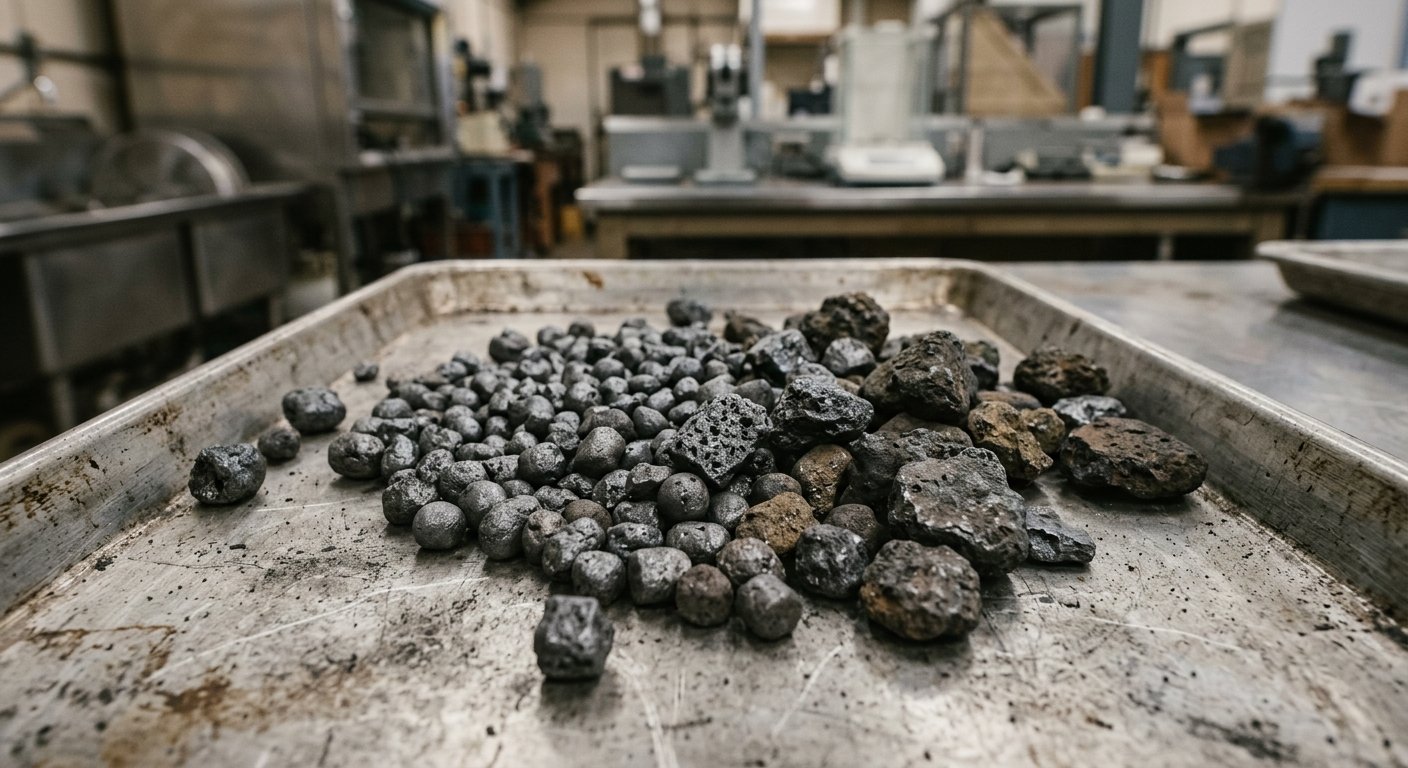
Controllo qualità del ferro spugnoso: metallizzazione, carbonio, densità
Spiegazione dei parametri di qualità del DRI: grado di metallizzazione, ferro totale e metallico, carbonio, densità apparente, indice di resistenza all'abrasione (tumbler index) e intervalli secondo la norma IS 15774.
La qualità del ferro spugnoso (DRI) è definita da cinque parametri misurabili: grado di metallizzazione, contenuto di ferro totale, contenuto di ferro metallico, contenuto di carbonio e densità apparente. Questi parametri determinano quanta parte della carica di DRI si converte utilmente in acciaio nel forno ad arco elettrico (EAF) e a quale costo energetico. La norma indiana IS 15774:2018 (Bureau of Indian Standards) consolida le specifiche in un unico riferimento applicabile sia al DRI a base carbone che a quello a base gas [1]. Questo articolo esamina ciascun parametro, la relativa formula, l'intervallo tipico in base al processo produttivo e i fattori che ne determinano la variazione a livello di impianto.
Cosa significa la qualità del ferro spugnoso per i produttori di acciaio
Il DRI è principalmente un materiale di carica per EAF e un sostituto del rottame. Il controllo qualità inizia con l'acquirente. Un produttore di acciaio che seleziona un fornitore di DRI si pone le seguenti domande: quanto ferro utilizzabile contiene questo materiale, quanto materiale non ferroso (ganga, ossidi residui) genererà nel forno e qual è il contributo di carbonio al bagno?
Ogni parametro di qualità del DRI si traduce direttamente in un costo per l'EAF. Una bassa metallizzazione comporta più scoria, tempi di colata più lunghi, maggiore consumo di elettrodi e una minore resa in acciaio per carica. Un elevato contenuto di ganga significa più fondente e più energia per fonderla. Un basso contenuto di carbonio implica un minor apporto di energia chimica al bagno, spostando una quota maggiore del carico energetico sull'energia elettrica [2].
Il processo di produzione del ferro spugnoso fornisce un prodotto la cui qualità dipende dal percorso di processo, dalla qualità del minerale e del carbone/gas, e dalla precisione di controllo del reattore di riduzione. Il motivo per cui il materiale è chiamato ferro spugnoso è direttamente rilevante in questo contesto: la microstruttura porosa creata durante la riduzione allo stato solido è responsabile sia dell'elevata reattività (rischio di riossidazione) che dell'elevata energia superficiale apprezzata dagli operatori EAF.
Grado di metallizzazione: la principale metrica di qualità
Il grado di metallizzazione (DoM) è il rapporto tra ferro metallico e ferro totale nel DRI, espresso in percentuale. È il numero di qualità del DRI più importante in assoluto, poiché definisce la proporzione di ferro utilizzabile nella carica.
DoM (%) = (Fe_metallico / Fe_totale) × 100
Dove:
- Fe_metallico = ferro presente come Fe0 (ferro metallico ridotto), frazione di massa o g per campione
- Fe_totale = ferro totale nel campione di DRI, comprensivo di ferro metallico più ferro ancora presente negli ossidi residui (FeO, Fe2O3, Fe3O4), frazione di massa o g per campione
Grado di metallizzazione: la misura in cui gli ossidi di ferro nel minerale sono stati convertiti in ferro metallico durante il processo di riduzione. Espresso come percentuale di ferro metallico rispetto al ferro totale. Un valore del 100% significherebbe che tutto il ferro è in forma metallica senza ossidi residui; il DRI commerciale varia approssimativamente dall'85% al 95% [2][3].
Intervalli tipici per percorso di produzione [1][2][3]:
| Percorso | DoM tipico | Minimo Grado 1 IS 15774:2018 |
|---|---|---|
| A base gas (forno a tino: Midrex, ENERGIRON) | 92-95% | 92% |
| A base carbone (forno rotante: SL/RN e varianti) | 88-92% | 90% |
Un calo di 2 punti percentuali nella metallizzazione in un forno da 100 TPD sposta circa 2 tonnellate al giorno di ferro metallico in ossido residuo nel prodotto. In un EAF da 80 t/colata che opera con una carica ad alto contenuto di DRI, ciò si traduce in un volume di scoria misurabilmente maggiore, un consumo aggiuntivo di calce e tempi di colata (tap-to-tap) più lunghi [4].
Una bassa metallizzazione causa: aumento del volume di scoria (tipicamente 1 kg di scoria aggiuntiva per punto percentuale di DoM sotto il target), tempi di colata prolungati (0,5-1 kWh/t di energia aggiuntiva per punto sotto la metallizzazione target), maggiore consumo di elettrodi e una minore resa di acciaio liquido dalla carica.
Ferro totale e ferro metallico: cosa mostra il certificato di analisi
Il rapporto di analisi del DRI riporta due valori relativi al ferro che gli ingegneri addetti agli acquisti devono leggere congiuntamente: ferro totale (Fe_T) e ferro metallico (Fe_M).
Il Fe_T è il contenuto combinato di tutto il ferro nel materiale, sia metallico che legato agli ossidi. Il Fe_M è solo la frazione ridotta e utilizzabile. La differenza (Fe_T meno Fe_M) rappresenta il carico di ossidi residui che il produttore di acciaio deve eliminare dal bagno tramite scorificazione.
| Parametro | DRI a base gas | DRI a base carbone | Grado 1 IS 15774 |
|---|---|---|---|
| Ferro totale (Fe_T) | 90-94% | 90-93% | 88% min |
| Ferro metallico (Fe_M) | 83-89% | 80-84% | 78% min |
| Grado di metallizzazione | 92-95% | 88-92% | 90% min (base carbone) |
| Ganga (SiO2 + Al2O3 + CaO) | 3.0-5.0% | 3.0-5.0% | 10% max |
| Fosforo (P) | 0.05-0.09% | 0.04-0.06% | 0.09% max |
| Zolfo (S) | 0.02-0.04% | 0.02-0.04% | 0.04% max |
Fonti: IS 15774:2018 [1]; IspatGuru, Direct Reduced Iron [2]; calcolo metallizzazione askmemetallurgy.com [3].
Il contenuto di ganga merita attenzione in fase di approvvigionamento. Un fornitore il cui minerale di alimentazione è ricco di silice fornirà DRI con una ganga più elevata, anche se la metallizzazione è nominalmente conforme alle specifiche. Il ferro netto utilizzabile per tonnellata di DRI è il Fe_M meno qualsiasi ferro metallico che il produttore di acciaio perde per trascinamento nella scoria. Verificare il contenuto di ganga rispetto alle specifiche contrattuali; è importante quanto la metallizzazione per l'economia dell'EAF.
Contenuto di carbonio: la variabile che differisce maggiormente tra i percorsi
Il contenuto di carbonio è il parametro di qualità del DRI che dipende maggiormente dal percorso produttivo. Il ferro spugnoso a base carbone proveniente da forni rotanti contiene tipicamente 0,08-0,2% di carbonio. Il DRI a base gas proveniente da forni a tino contiene tipicamente 1,0-2,5%, talvolta superiore nel prodotto intenzionalmente carburato [2][5].
Questa differenza di dieci volte è determinata dal potenziale di carburazione del mezzo riducente:
In un forno rotante a base carbone, il carbone solido funge sia da riducente che da combustibile. I volatili del carbone generano CO e CO2 nella fase gassosa, ma il ferro prodotto alla temperatura di riduzione assorbe pochissimo carbonio in fase solida. La maggior parte del carbonio viene consumata nella combustione all'interno della camera di combustione del forno.
In un forno a tino a base gas, il gas naturale riformato (CO + H2) riduce il minerale nella parte superiore del tino e successivamente il DRI viene raffreddato nella parte inferiore da un gas di raffreddamento contenente metano. Il metano si scinde e deposita carbonio nella struttura porosa del ferro durante il raffreddamento: questo è lo stadio di carburazione. Gli operatori possono regolare il contenuto di carbonio modificando la frazione di metano nel gas di raffreddamento. Un target tipico è 1,5-2,0% di carbonio.
Il valore del carbonio più elevato per l'EAF è quantificabile: ogni chilogrammo di carbonio sciolto nel bagno contribuisce con circa 2,3 kWh di energia chimica (dalla combustione esotermica del C con l'ossigeno nel bagno) [4]. Per un EAF da 100 t che opera a 300 kWh/t di energia elettrica, una miscela di DRI al 2% di carbonio anziché allo 0,2% fornisce significativi risparmi di energia elettrica per colata.
La norma IS 15774:2018 specifica un carbonio minimo per ciascun percorso: base gas 1,3% minimo; per la base carbone, lo standard affronta il carbonio principalmente come un limite massimo (basso zolfo, carbonio controllato). In pratica, il prodotto a base carbone ha tipicamente 0,08-0,2% di carbonio e il limite rilevante dello standard per la base carbone riguarda la stabilità del prodotto piuttosto che il valore minimo di carbonio [1].
Densità apparente e indice di tumbler: indicatori di qualità fisica
La densità apparente misura la massa per unità di volume dei singoli pezzi di DRI (escludendo i vuoti tra le particelle). L'indice di tumbler misura la resistenza alla degradazione dimensionale durante la movimentazione.
Densità apparente (g/cm3) = massa del campione / volume del campione (picnometria a elio o immersione in acqua)
Densità apparente alla rinfusa (g/cm3): la massa per unità di volume inclusi i vuoti tra le particelle; rilevante per il dimensionamento di sili e tramogge, ma non per le specifiche di qualità.
| Parametro fisico | DRI a base gas | DRI a base carbone | Fonte |
|---|---|---|---|
| Densità apparente | 3.4-3.6 g/cm3 | 3.4-3.6 g/cm3 | IspatGuru [2] |
| Densità alla rinfusa | 1.6-1.9 g/cm3 | 1.8-2.0 g/cm3 | IspatGuru [2] |
| Indice di tumbler (+6.3 mm) | 90% minimo | 85% minimo | IS 15774:2018 [1] |
L'indice di tumbler (metodo ISO 15967) viene misurato facendo ruotare il DRI in un tamburo a una velocità e per un tempo definiti, quindi vagliando su 6,3 mm. La percentuale trattenuta sopra i 6,3 mm è l'indice di tumbler. Un basso indice di tumbler (sotto specifica) significa una significativa generazione di fini durante il trasporto, il trasferimento tramite elevatori a tazze e la carica dell'EAF. I fini vengono persi nel sistema di abbattimento fumi o creano problemi di impaccamento nei sili dell'EAF; il recupero effettivo di ferro per tonnellata di DRI caricato diminuisce di conseguenza.
Una densità apparente inferiore alle specifiche segnala tipicamente una riduzione incompleta (alto ossido residuo, basso Fe_M) o un'eccessiva porosità dovuta a carbone ad alto contenuto di volatili, dove il rilascio di volatili ha lasciato una microstruttura insolitamente aperta. Come segnale di allarme negli acquisti, una densità apparente costantemente inferiore a 3,2 g/cm3 giustifica un'indagine sulla qualità del carbone del fornitore e sul profilo di temperatura del forno.
Come le condizioni operative del forno determinano la variazione della qualità
In un forno rotante a base carbone, la metallizzazione e il contenuto di carbonio rispondono direttamente al profilo di temperatura, al tempo di residenza, alla qualità del carbone e all'integrità delle tenute alle cappe di ingresso e uscita.
Temperatura: riduzione di picco nella zona 950-1.050°C. Sotto i 900°C, la cinetica di riduzione dell'ossido di ferro rallenta significativamente; anche la reazione di Boudouard (C + CO2 → 2CO), che genera gas riducente, decelera. Sopra i 1.100°C, l'accrezione (formazione di anelli dovuta all'adesione della scoria al refrattario) diventa il vincolo operativo dominante.
Tempo di residenza: tipicamente 8-12 ore per un forno per DRI a base carbone da 60-100 m. Un tempo di residenza più breve significa una metallizzazione inferiore per una data qualità del carbone. Gli operatori estendono il tempo di residenza riducendo la produttività, ma ciò riduce il tasso di produzione.
Qualità del carbone: il contenuto di carbonio fisso (tipicamente 25-35%) e la materia volatile (22-30%) determinano direttamente il tasso di generazione di gas riducente per tonnellata di carbone caricato. Il consumo specifico di carbone per il DRI da forno rotante è tipicamente di 950-1.000 kg di carbone per tonnellata di DRI, equivalente a 21-23 GJ/t DRI [5]. Un carbone fuori specifica degrada sia la metallizzazione che la costanza qualitativa.
Integrità delle tenute: l'ingresso di aria alla tenuta di uscita causa la riossidazione del DRI finito a 200-400°C. Un ingresso costante di aria parassita del 5-10% all'uscita può ridurre la metallizzazione di 2-4 punti percentuali rispetto al target interno al forno. Questo è il motivo per cui la tenuta dei forni negli impianti DRI è una questione di qualità del prodotto, non solo di efficienza energetica. I sistemi di tenuta duplex di Oswal per forni metallurgici sono progettati specificamente per mantenere l'integrità atmosferica all'uscita del forno durante l'intero periodo tra le fermate programmate per manutenzione.
Common questions about this topic
Il DRI a base gas (forno a tino) raggiunge costantemente una metallizzazione del 92-95%; il DRI a base carbone (forno rotativo) raggiunge l'88-92%. La norma IS 15774:2018 stabilisce i minimi per il Grado 1: 90% per il processo a base carbone e 92% per quello a base gas [1]. I produttori di acciaio tramite forno elettrico ad arco (EAF) che richiedono prodotti piani di alta qualità specificano solitamente un minimo del 92%, indipendentemente dal processo utilizzato. Al di sotto di tali soglie, il volume di scoria aumenta in modo significativo, i tempi di colata si prolungano e la resa dell'acciaio dalla carica diminuisce [2][4].
I forni rotativi a carbone utilizzano carbonio solido come riducente; la maggior parte del carbonio viene consumata per generare gas riducente CO piuttosto che disciogliersi nel prodotto solido. Il ferro spugna finito contiene tipicamente lo 0,08-0,2% di carbonio [2]. I forni a tino a gas utilizzano metano riformato come gas riducente; lo stadio di raffreddamento del tino inferiore espone deliberatamente il DRI ridotto al metano, che si scinde depositando carbonio nella microstruttura porosa del ferro. Gli operatori possono puntare a un contenuto di carbonio dell'1,5-2,5% regolando la frazione di metano nel gas di raffreddamento [2][5]. Il maggiore contenuto di carbonio del DRI a gas rappresenta un input prezioso per la produzione di acciaio: riduce il fabbisogno di energia elettrica nel bagno del forno elettrico ad arco (EAF) di circa 2,3 kWh per chilogrammo di carbonio caricato.
L'indice di tumbler è la percentuale di DRI trattenuta su un vaglio da 6,3 mm dopo un test di rotolamento standardizzato (ISO 15967). Esso misura la resistenza meccanica e la resistenza alla generazione di polveri fini durante la movimentazione e la carica. La norma IS 15774:2018 specifica un valore minimo del 90% per il DRI prodotto a gas e dell'85% per il DRI prodotto a carbone [1]. Un indice di tumbler costantemente basso indica una riduzione incompleta (che rende i singoli pezzi di DRI strutturalmente deboli) o un uso eccessivo di carbone ad alto tenore di volatili nel forno rotante. Nel forno elettrico ad arco (EAF), le polveri fini generate da un DRI con basso indice di tumbler vengono trascinate nel sistema di abbattimento fumi, riducendo l'effettivo recupero di ferro per tonnellata caricata.
Sources
- Bureau of Indian Standards, *IS 15774:2018 Sponge Iron / Direct Reduced Iron (DRI), Hot Briquetted Iron (HBI) and Cold Briquetted Iron (CBI) for Steel Making (First Revision)*, 2018
- IspatGuru, *Direct Reduced Iron*, Samir Sarkar
- askmemetallurgy.com, *What Is Degree of Metallisation?*, calculation worked example
- Air Products, *Enhancing Direct Reduced Iron (DRI) for Use in Electric Steelmaking*, technical paper
- The Energy and Resources Institute (TERI), *Energy-Efficient Technology Options for Direct Reduction of Iron Process*, 2021
Articoli correlati
Discuss Your Sealing Requirements
Our engineering team can help identify the right sealing solution for your application.
Contact Engineering Team“Ovunque i forni rotanti ad alta temperatura operino in atmosfera controllata, i sistemi di tenuta Oswal garantiscono efficienza energetica e stabilità di processo.”