
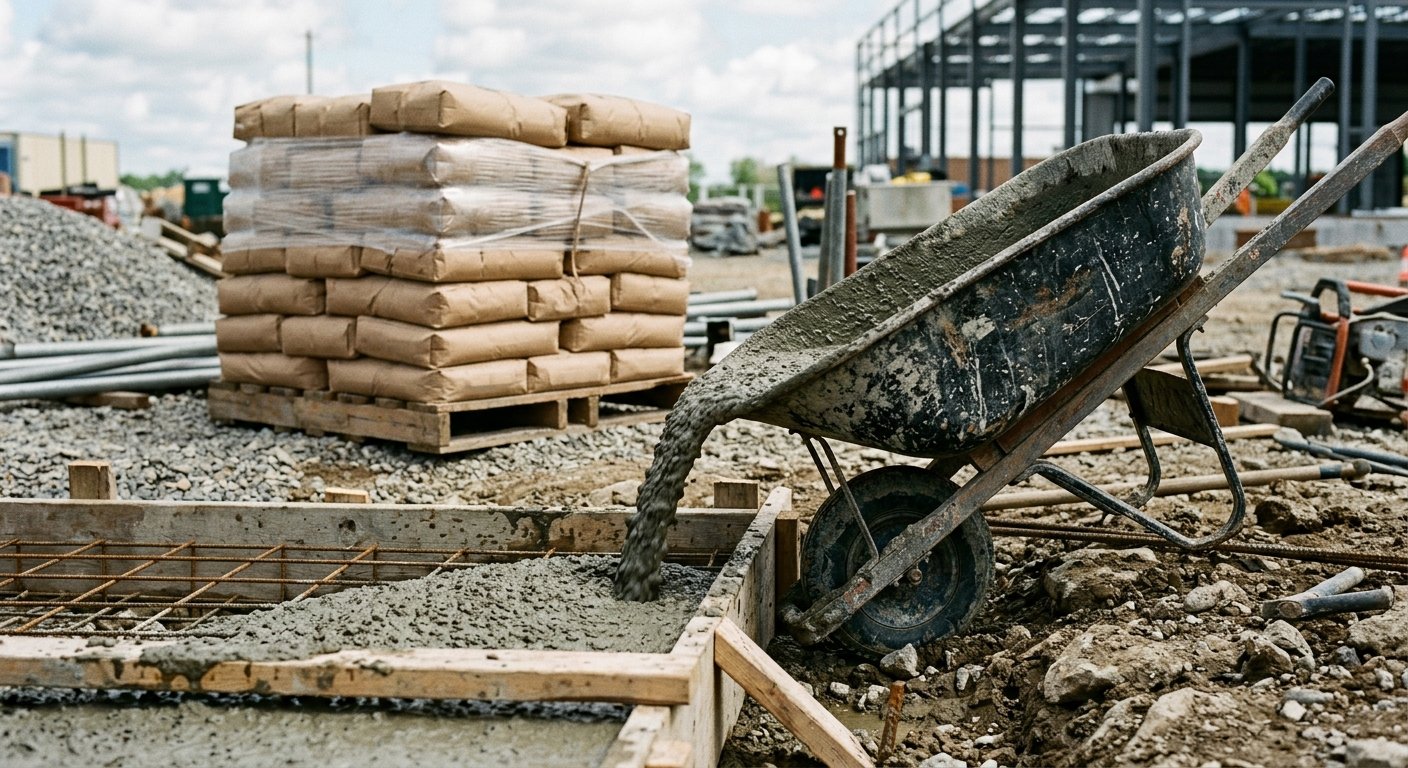
Qual è la differenza tra cemento e calcestruzzo?
Il cemento è il legante in polvere. Il calcestruzzo è composto da cemento + acqua + aggregati. Analisi delle differenze in termini di composizione, proprietà chimiche e ambiti applicativi.
Il cemento è una polvere grigia fine che funge da legante. Il calcestruzzo è il materiale composito indurito ottenuto miscelando cemento con acqua, sabbia e aggregati grossolani. Nel linguaggio comune i due termini vengono usati in modo intercambiabile (una "autobetoniera" trasporta in realtà calcestruzzo), ma in ingegneria e nelle normative hanno significati distinti.
La risposta breve
Il cemento è un ingrediente; il calcestruzzo è il materiale finito. Una miscela tipica di calcestruzzo è composta approssimativamente dal 10-15% di cemento, 60-75% di aggregati e 15-20% di acqua in volume [1]. Il cemento è il componente minore in massa e l'unico che reagisce chimicamente.
Cos'è il cemento
Il cemento è un legante idraulico, una polvere prodotta riscaldando calcare con argilla o scisto a circa 1.450 gradi Celsius in un forno rotativo, per poi macinare il clinker risultante con circa il 5% di gesso [2]. "Idraulico" significa che fa presa reagendo con l'acqua, non per essiccazione.
Il clinker di cemento Portland contiene quattro fasi minerali [3]: C3S (alite, resistenza a breve termine), C2S (belite, resistenza a lungo termine), C3A (cinetica di reazione iniziale) e C4AF (colore e resistenza minore). La mineralogia è trattata nell'articolo sulla composizione chimica del clinker. Il clinker viene prodotto attraverso il processo di produzione del cemento; i forni in cui viene realizzato sono le apparecchiature per le quali Oswal costruisce sistemi di sigillatura per forni.
Legante idraulico: un materiale che fa presa e acquisisce resistenza attraverso una reazione chimica con l'acqua e rimane stabile sott'acqua dopo l'indurimento.
Il cemento viene fornito in cantiere in due forme fisiche. Il cemento in sacchi è solitamente da 50 kg in India e da 25-42,5 kg altrove; il cemento sfuso viene consegnato tramite autocisterne ai sili presso impianti di betonaggio e prefabbricazione. In entrambi i casi, il legante che esce dall'impianto di cemento è la stessa polvere fine con una superficie specifica Blaine di circa 300-400 m²/kg per il cemento Portland ordinario e 350-450 m²/kg per i cementi miscelati [2]. Senza acqua è inerte; una volta miscelato, inizia a fare presa entro un'ora e continua ad acquisire resistenza per mesi.
Cos'è il calcestruzzo
Il calcestruzzo è un composito di pasta cementizia e aggregati. Il cemento e l'acqua formano una pasta che riveste le particelle di aggregato e le lega in un solido simile alla roccia man mano che il cemento idrata [4]. Gli aggregati costituiscono il 60-75% del calcestruzzo in volume e fungono da scheletro inerte portante [5]. Il rapporto acqua/cemento (tipicamente 0,4-0,6 in massa per il calcestruzzo strutturale) è la variabile più importante per la resistenza [1].
Una miscela strutturale rappresentativa M30 contiene circa 320-360 kg/m³ di cemento, 180-200 litri di acqua (ottenendo un a/c di circa 0,50), 700-750 kg/m³ di aggregato fine (sabbia) e 1.150-1.250 kg/m³ di aggregato grossolano (pietrisco 10-20 mm), oltre allo 0,5-1,5% di additivi chimici rispetto alla massa del legante. Ridurre il rapporto a/c da 0,55 a 0,40 con un superfluidificante può aumentare la resistenza cubica a 28 giorni da circa 30 MPa a oltre 50 MPa a parità di contenuto di legante, poiché la resistenza è dominata dalla porosità della pasta indurita, e la porosità è in gran parte funzione della quantità di acqua che deve essere alloggiata prima che l'idratazione la consumi.
Confronto diretto
| Proprietà | Cemento | Calcestruzzo |
|---|---|---|
| Cos'è | Polvere fine (legante) | Composito (legante + aggregati + acqua) |
| Ingredienti principali | Clinker (~95%) + gesso (~5%) | Cemento (10-15%), aggregati (60-75%), acqua (15-20%) |
| Massa volumica | ~1.440 kg/m3 (polvere sciolta) | 2.200-2.500 kg/m3 (indurito, peso normale) |
| Tempo di presa iniziale | 45 min minimo (ASTM C150, Tipo I) [6] | 1-3 ore dopo la miscelazione, dipende dalla miscela |
| Resistenza tipica a 28 gg | Non utilizzato strutturalmente da solo | 20-50 MPa edilizia generale; 100+ MPa alta resistenza (ACI 318 stabilisce un minimo di 17 MPa per calcestruzzo strutturale; l'alta resistenza è convenzionalmente 41 MPa / 6.000 psi e oltre) |
| Dove viene utilizzato | Un ingrediente, mai usato da solo | Fondazioni, solai, pilastri, pavimentazioni, dighe |
L'USGS riporta che il 70-75% delle vendite di cemento negli Stati Uniti è destinato ai produttori di calcestruzzo preconfezionato, un utile riscontro su quale materiale svolga il lavoro strutturale [7]. Il resto è suddiviso tra operazioni di prefabbricazione, stabilizzazione del suolo, cementazione di pozzi petroliferi e mercato al dettaglio in sacchi.
Come il cemento crea il calcestruzzo: la cronologia dell'idratazione
Il calcestruzzo acquisisce resistenza perché il cemento reagisce con l'acqua in una sequenza chiamata idratazione, producendo gel di silicato di calcio idrato (C-S-H) che blocca l'aggregato in un solido continuo [3]. Il C-S-H è la fase portante primaria, che rappresenta circa il 50-60% del volume della pasta cementizia completamente idratata. La sequenza ha tappe ben definite. Nei primi 15 minuti, il C₃A reagisce quasi istantaneamente con l'acqua, ma il gesso interferisce per rallentare tale reazione e preservare la lavorabilità durante quello che viene chiamato periodo di dormienza. La presa iniziale avviene circa 45-90 minuti dopo la miscelazione, la presa finale circa 6-10 ore dopo. Entro 24 ore, l'idratazione dell'alite ha prodotto abbastanza C-S-H da conferire a una tipica miscela M30 una resistenza a compressione di 8-12 MPa. Entro 7 giorni la miscela raggiunge il 65-75% della sua resistenza a 28 giorni; a 28 giorni si raggiunge la resistenza di progetto convenzionale. Il C₂S continua poi a contribuire lentamente, aumentando la resistenza di un ulteriore 10-20% tra i 28 e i 90 giorni, e progressivamente oltre se persistono condizioni di umidità.
Perché la confusione è costosa
L'uso improprio quotidiano tra cemento e calcestruzzo è innocuo durante una visita in cantiere, ma costoso negli approvvigionamenti. Una specifica che richiede "cemento" quando intende calcestruzzo non può essere prezzata o testata; una bolla di consegna che elenca calcestruzzo quando l'acquirente si aspettava polvere di cemento risulta non conforme all'arrivo. L'ACI 318 e l'IS 456 mantengono i due termini rigorosamente distinti nei codici di progettazione, e le bolle di consegna del calcestruzzo preconfezionato riportano parametri di progettazione della miscela (contenuto di legante, a/c, classe di consistenza, additivi) che non hanno significato al cancello dell'impianto di cemento. Per quanto riguarda il contesto a monte, il cemento è il prodotto di una linea di cottura la cui chimica delle fasi è definita nella composizione chimica del clinker, e sempre più spesso tale legante è esso stesso una miscela con materiali cementizi supplementari sostituiti a parte del clinker prima ancora di raggiungere l'impianto di calcestruzzo.
Common questions about this topic
No. Il cemento unito alla sola acqua forma la pasta cementizia, che indurisce ma è priva della massa e della struttura portante fornite dagli aggregati. Il calcestruzzo aggiunge aggregati fini (sabbia) e aggregati grossi (ghiaia o pietrisco); gli aggregati costituiscono il 60-75% del volume [5].
Il cemento è la polvere legante. Il calcestruzzo utilizza sia aggregati fini che grossolani ed è progettato per sostenere carichi strutturali. La malta utilizza cemento, acqua e solo aggregato fine (sabbia), fornendo una pasta lavorabile utilizzata per legare mattoni o blocchi piuttosto che per sostenere carichi primari. La boiacca è simile alla malta, ma con un contenuto d'acqua più elevato per garantire la fluidità necessaria al riempimento dei giunti.
È una scorciatoia linguistica. Il cemento è l'ingrediente riconoscibile e nominato, quindi "camion del cemento", "pavimento in cemento" e "impastatrice di cemento" sono diventati un'abbreviazione comune per il calcestruzzo. Nelle specifiche ASTM, nei codici di progettazione ACI e nei documenti di approvvigionamento i due termini sono mantenuti rigorosamente distinti.
Sources
- American Cement Association (formerly Portland Cement Association), *Cement & Concrete FAQ*, 2025
- Global Cement and Concrete Association (GCCA), *About Cement & Concrete*, 2024
- American Cement Association / MIT Concrete Sustainability Hub, *Concrete Science Platform White Paper* (cement chemists' notations and C-S-H hydration product reference). http://www2.cement.org/exec2/pdfs/sn3228.pdf and
- American Concrete Institute (ACI), *Definition of Portland Cement* (ACI FAQ)
- American Concrete Institute (ACI), *What is aggregate?* (ACI FAQ): aggregates comprise 60-75% of total concrete volume
- ASTM International, *ASTM C150/C150M Standard Specification for Portland Cement* (current edition): minimum 45-minute initial setting time (Vicat) for Type I cement
- U.S. Geological Survey, *Mineral Commodity Summaries 2026: Cement*
- National Ready Mixed Concrete Association (NRMCA), *About Concrete*. https://www.nrmca.org/about-nrmca/about-concrete/ --- *If you operate a cement plant and want to dig into the kiln side of the process, [false air control in cement kilns](/en/blog/understanding-false-air-in-cement-kilns) is the operational lever with the largest fuel-economy upside on most lines.*
Articoli correlati
Discuss Your Sealing Requirements
Our engineering team can help identify the right sealing solution for your application.
Contact Engineering Team“Ovunque i forni rotanti ad alta temperatura operino in atmosfera controllata, i sistemi di tenuta Oswal garantiscono efficienza energetica e stabilità di processo.”