
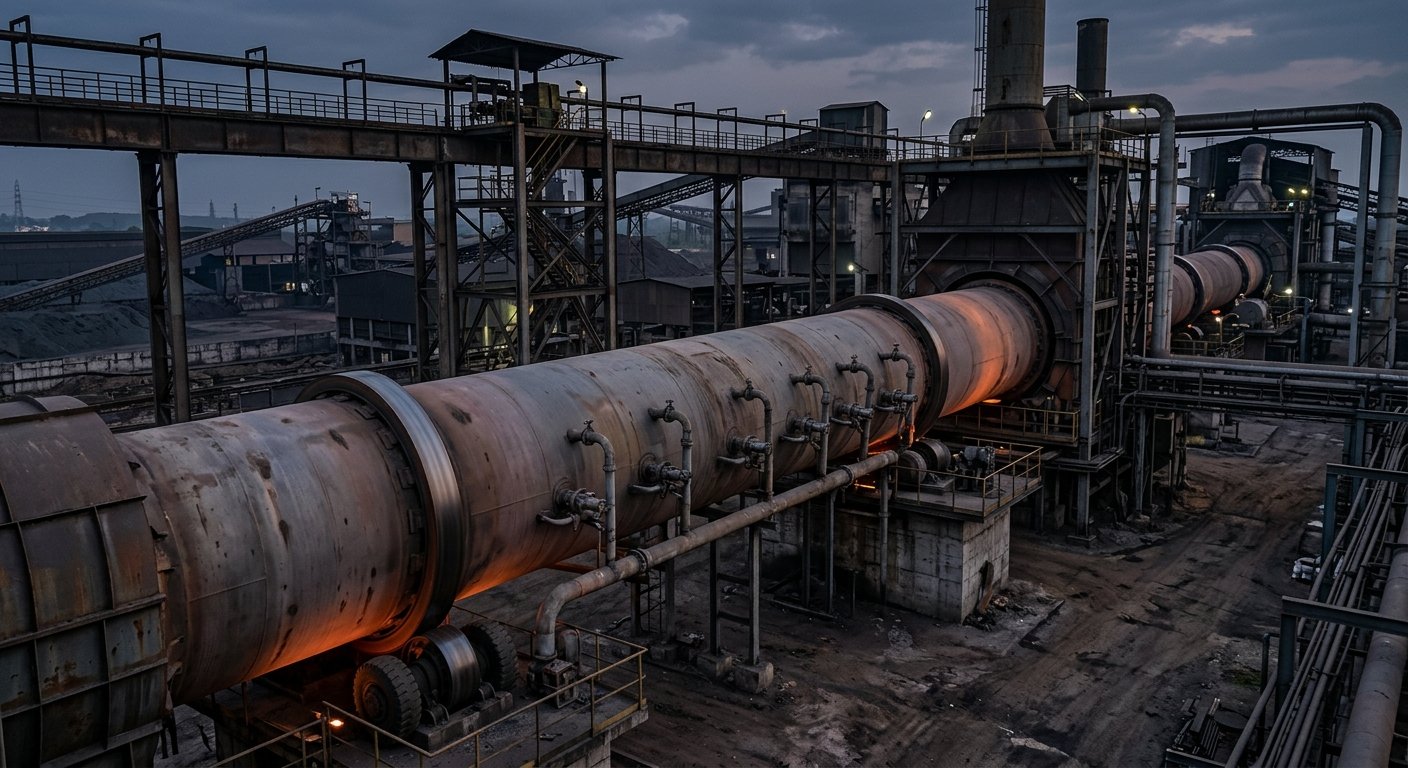
Spiegazione della produzione di ferro spugna a base di carbone
La produzione di ferro spugnoso a base di carbone utilizza un forno rotativo, carbone non cokizzabile e minerale di ferro per ottenere DRI (ferro a riduzione diretta). Processo, chimica e importanza della tenuta del forno.
La produzione di ferro spugnoso a carbone è la riduzione diretta del minerale di ferro che utilizza carbone non cokizzabile sia come riducente che come combustibile all'interno di un forno rotante, eseguita allo stato solido a 1.000-1.100°C senza alcuna fusione. Il prodotto, chiamato ferro spugnoso o ferro preridotto (DRI), è la principale carica per la produzione di acciaio nel settore dei forni ad arco elettrico in India. Nell'anno fiscale 2024, l'India ha prodotto 54,7 milioni di tonnellate di DRI — il più grande output nazionale al mondo — con i forni rotanti a carbone che rappresentano circa l'80% di tale totale [1][2].
Ferro preridotto (DRI) / ferro spugnoso: ferro metallico prodotto rimuovendo l'ossigeno dal minerale di ferro allo stato solido, al di sotto del punto di fusione del ferro. La struttura porosa e alveolare che rimane dopo la rimozione dell'ossigeno conferisce al prodotto il suo nome colloquiale. Si veda il processo di produzione del ferro spugnoso per il confronto completo tra i vari metodi.
Cos'è il ferro spugnoso a carbone e in cosa differisce dal DRI a gas?
Il DRI a carbone utilizza un forno rotante e carbone non cokizzabile; il DRI a gas utilizza un forno a tino e gas naturale riformato (H2+CO). Entrambi i metodi producono lo stesso prodotto finale — ferro metallico con una metallizzazione dell'88-94% — ma le attrezzature, i materiali di alimentazione e le condizioni operative differiscono sostanzialmente. Il metodo a carbone è quello dominante in India perché il paese dispone di abbondanti riserve di carbone non cokizzabile e, storicamente, di un limitato gas naturale nazionale. Il metodo a gas domina in Medio Oriente e Nord Africa. In India sono presenti 285 impianti DRI, la maggior parte dei quali utilizza forni rotanti a carbone [3].
Materiali di alimentazione e loro ruoli
I tre materiali di alimentazione sono il minerale di ferro (minerale in pezzi o pellet), il carbone non cokizzabile (riducente e fonte di calore) e la dolomite (assorbitore di zolfo e agente fondente).
| Materiale | Specifica tipica | Ruolo nel processo |
|---|---|---|
| Minerale di ferro (pezzi) | 65-67% Fe, dimensioni 10-30 mm | Fonte di ferro; un Fe più elevato riduce la ganga e migliora la metallizzazione |
| Carbone non cokizzabile | 35-45% carbonio fisso, <0,5% S, 25-30% sostanze volatili | Riducente (fornisce CO) e combustibile (brucia per fornire calore) |
| Dolomite | CaCO3.MgCO3, bassa silice | Assorbe lo zolfo dalla combustione del carbone; modera il comportamento di fusione delle ceneri |
Fonte: TERI Energy-Efficient Technology Options for DRI, 2021 [3]; panoramica sul DRI a carbone di IspatGuru [4].
Il carbone non cokizzabile è l'input fondamentale. Il metodo dell'altoforno richiede carbone cokizzabile, che deve essere importato a caro prezzo dalla maggior parte dei produttori di acciaio indiani. Il carbone non cokizzabile, disponibile a livello nazionale a costi inferiori, è ciò che rende il DRI a carbone economicamente vantaggioso per i produttori indiani. La dolomite viene aggiunta in una percentuale pari a circa il 5-8% del peso del minerale di ferro; la sua funzione principale è la cattura dello zolfo, ma sposta anche verso l'alto il punto di fusione delle ceneri del carbone, riducendo il rischio di incrostazioni.
Il forno rotante: zone e profilo di temperatura
Il forno rotante è suddiviso in tre zone funzionali: una zona di preriscaldamento (da temperatura ambiente a circa 800°C), una zona di riduzione (800-1.050°C) e una zona di transizione/scarico dove le temperature di picco raggiungono i 1.000-1.100°C.
| Zona | Intervallo di temperatura | Reazioni principali |
|---|---|---|
| Preriscaldamento | Ambiente a ~800°C | Evaporazione dell'umidità; devolatilizzazione del carbone; combustione parziale dei volatili |
| Riduzione | 800-1.050°C | Riduzione indiretta: Fe2O3 + 3CO → 2Fe + 3CO2; Boudouard: CO2 + C → 2CO |
| Transizione di scarico | ~1.000-1.100°C (picco) | Riduzione finale; il raffreddamento controllato inizia dopo l'uscita dal forno |
Fonte: IspatGuru [4]; rapporto TERI [3].
Geometria del forno per un tipico impianto indiano: 40-80 m di lunghezza, 3-5 m di diametro, inclinazione di 2-3 gradi, rotazione a 0,3-1,0 giri/min [3][4]. L'alimentazione entra dall'estremità rialzata (ingresso); il DRI viene scaricato dall'estremità inferiore (uscita). Il tempo di residenza è di 6-10 ore per i forni con capacità compresa tra 100 e 500 TPD [3].
La chimica chiave è la reazione di Boudouard e la riduzione indiretta:
Fe2O3 + 3CO  →  2Fe + 3CO2    (riduzione indiretta, dominante)
CO2 + C      →  2CO            (equilibrio di Boudouard, rigenera il riducente)
Dove:
- Fe2O3 = ossido di ferro (ematite, principale minerale di ferro)
- CO = monossido di carbonio (agente riducente, generato dal carbone)
- C = carbonio fisso nel carbone non cokizzabile
- La reazione di Boudouard è endotermica ed è favorita sopra i ~700°C
L'iniezione controllata di aria attraverso tubi montati sul mantello gestisce il rapporto CO/CO2 e sostiene la temperatura nella zona di riduzione. Il tasso di iniezione dell'aria è la principale variabile di controllo del processo in un forno a carbone.
Perché la sigillatura del forno è critica nella produzione di DRI
Il processo DRI a carbone dipende da un'atmosfera riducente controllata all'interno del forno: qualsiasi ingresso di aria ambiente converte CO e H2 in CO2 e H2O, riportando il ferro già ridotto a ossidi di ferro.
Nei forni da cemento, l'ingresso di aria parassita rappresenta principalmente una penalità in termini di combustibile e potenza dei ventilatori. Nei forni DRI, l'aria parassita danneggia direttamente la qualità del prodotto: la riossidazione del ferro metallico abbassa il tasso di metallizzazione (obiettivo: superiore all'88-92%) e aumenta il contenuto di FeO nel ferro spugnoso finito. Un tasso di metallizzazione inferiore si traduce in un prodotto di qualità inferiore che richiede un prezzo di mercato più basso, oltre alla penalità energetica.
Le due interfacce di tenuta principali sono l'ingresso del forno (lato alimentazione) e l'uscita del forno (lato scarico). Entrambe sono giunzioni tra parti rotanti e stazionarie che operano in un ambiente caldo, polveroso e con atmosfera riducente — esattamente le condizioni per cui è progettato il sistema di tenuta duplex per forni di Oswal. Per il caso tecnico completo sui requisiti di sigillatura degli impianti DRI, si veda la sigillatura dei forni negli impianti DRI.
Incrostazioni (Accretion): la sfida operativa determinante
L'incrostazione è l'accumulo di materiale semi-fuso sul rivestimento refrattario del forno; è la sfida operativa più problematica nei forni DRI a carbone [5][6].
L'incrostazione si forma quando composti complessi a basso punto di fusione derivanti dalle ceneri del carbone, dalla ganga del minerale di ferro e dalla dolomite si fondono in condizioni riducenti alla temperatura operativa e aderiscono alla parete refrattaria. I fattori che contribuiscono includono una temperatura eccessiva nella zona di riduzione, un alto contenuto di ceneri nel carbone, un elevato contenuto di fini nell'alimentazione del minerale e un basso rapporto carbonio/ferro all'estremità di scarico. Man mano che l'incrostazione aumenta, la sezione trasversale del forno si restringe, la capacità diminuisce e, se non controllato, il forno deve essere spento per la rimozione manuale.
Tata Sponge Iron Limited (Odisha, India) ha pubblicato un caso di studio sottoposto a revisione paritaria sul controllo delle incrostazioni nel suo impianto DRI a carbone, dimostrando che una combinazione di una gestione più rigorosa della temperatura, una migliore specifica della qualità del carbone e un'ottimizzazione della programmazione dei tubi dell'aria ha ridotto la frequenza delle incrostazioni e migliorato la disponibilità del forno [6].
Misure di controllo nella pratica:
- Mantenere la temperatura di picco della zona di riduzione al di sotto della temperatura di fusione delle ceneri del carbone utilizzato
- Specificare carbone con temperatura di fusione delle ceneri superiore a 1.250°C ove possibile
- Mantenere un dosaggio adeguato di dolomite per innalzare la temperatura di fusione effettiva della miscela ceneri-ganga
- Regolare l'iniezione dei tubi dell'aria per prevenire punti caldi localizzati
Parametri operativi chiave in sintesi
| Parametro | Intervallo tipico | Nota |
|---|---|---|
| Temperatura forno, zona di riduzione picco | 1.000-1.100°C | Valori più alti rischiano incrostazioni; valori più bassi rischiano una riduzione incompleta |
| Tempo di residenza | 6-10 ore | Per forni da 100-500 TPD; scala con la lunghezza del forno [3] |
| Tasso di metallizzazione (obiettivo prodotto) | >88-92% | Più alto è meglio; la riossidazione e la bassa temperatura di riduzione lo riducono |
| Intervallo di capacità installata, India | 50-500 TPD per forno | 285 impianti in India, principalmente a carbone [3] |
| Consumo di carbone non cokizzabile | ~1,0-1,3 t per t DRI | Varia con la qualità del carbone e l'efficienza del forno [3][4] |
| Aggiunta di dolomite | ~5-8% del peso del minerale di ferro | Fonte: TERI [3] |
Common questions about this topic
Il DRI a base carbone utilizza un forno rotativo e carbone non cokizzabile come agente riducente; il DRI a base gas utilizza un forno a tino e gas riducente H2+CO riformato da gas naturale. Il processo a base carbone predomina in India poiché il carbone non cokizzabile è abbondante e a basso costo a livello nazionale. Il processo a base gas predomina in Medio Oriente, dove è disponibile gas naturale a basso costo. Entrambi i processi producono un ferro metallizzato equivalente, ma quello a base gas raggiunge tipicamente gradi di metallizzazione più elevati e genera minori emissioni di CO2 per tonnellata di DRI.
Carbone non cokificabile con circa il 35-45% di carbonio fisso, meno dello 0,5% di zolfo e il 25-30% di materie volatili [3][4]. Non è richiesto carbone cokificabile, il che rappresenta il principale vantaggio economico del DRI a base di carbone rispetto alla via dell'altoforno. L'elevato contenuto di materie volatili contribuisce a una precoce generazione di gas e favorisce il controllo della temperatura; l'alto contenuto di carbonio fisso spinge l'equilibrio di Boudouard verso la generazione di CO. Lo zolfo deve essere basso perché si trasferisce nel prodotto e degrada la qualità dell'acciaio a valle; l'aggiunta di dolomite assorbe lo zolfo residuo nel forno.
L'ingresso di aria parassita all'ingresso o all'uscita del forno riossida il ferro metallico già ridotto, riducendo il grado di metallizzazione e degradando la qualità del prodotto; un impatto sulla qualità che non si verifica nei forni da cemento, dove il prodotto non risente di una lieve esposizione all'ossigeno alla temperatura operativa. Per gli operatori dell'industria metallurgica, un calo di 2-3 punti percentuali nella metallizzazione dovuto a una scarsa tenuta può declassare un'intera colata di DRI da una qualità premium a una di grado inferiore. Consultare la tenuta dei forni negli impianti DRI per i dettagli tecnici.
Sources
- Midrex Technologies, *World DRI Production Reaches 140.8 Mt in 2024*, 2025. India 54.7 Mt, global record 140.8 Mt
- The Coal Trader, *India's DRI Production Growth Outpaces Crude Steel, But Coal Reliance Remains*, 2024. Coal-based approximately 80% of India DRI output
- The Energy and Resources Institute (TERI), *Energy-Efficient Technology Options for Direct Reduction of Iron Process*, 2021. 285 DRI plants in India; kiln specifications; coal consumption ranges
- IspatGuru, *Coal Based Direct Reduction Rotary Kiln Process*, 2022. Temperature profile, feed specifications, residence time, process chemistry
- Singh, B.K. and Jain, R., *A Study on the Accretion Formation in DRI Kilns and Possible Ways for its Reduction*, IOSR Journal of Mechanical and Civil Engineering, Vol. 12, Issue 6, 2015
- Puranik, S.A. et al., *Optimal Control of Accretion Growth and Quality of Sponge Iron in a Coal-Fired Rotary Kiln at Tata Sponge, India*, ResearchGate, 2018
Articoli correlati
Discuss Your Sealing Requirements
Our engineering team can help identify the right sealing solution for your application.
Contact Engineering Team“Ovunque i forni rotanti ad alta temperatura operino in atmosfera controllata, i sistemi di tenuta Oswal garantiscono efficienza energetica e stabilità di processo.”