
OPC vs PPC vs PSC: Qual è la differenza?
OPC, PPC e PSC differiscono per contenuto di clinker, tipo di SCM, norma BIS e impronta di CO₂. Confronto diretto e casi d'uso.
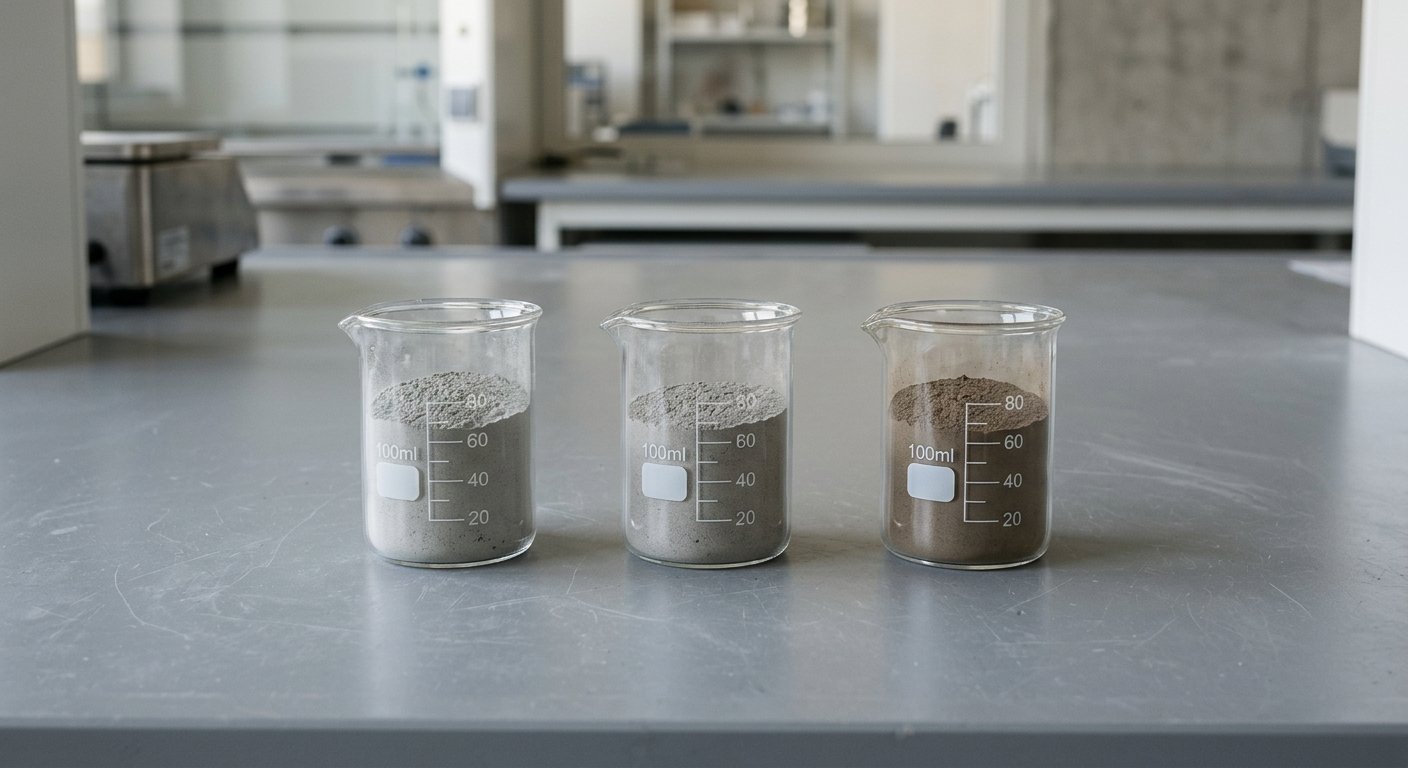
OPC, PPC e PSC sono tre tipologie di cemento indiano industria del cemento che differiscono per contenuto di clinker e per il materiale cementizio supplementare (SCM) miscelato. L'OPC è composto per circa il 95% da clinker, il PPC miscela il 15-35% di ceneri volanti e il PSC miscela il 25-70% di loppa d'altoforno granulata macinata (GGBS). Sono conformi rispettivamente alle norme IS 269:2015, IS 1489 (Parte 1):2015 e IS 455:2015, e differiscono in modo misurabile per resistenza iniziale, calore di idratazione e impronta di CO₂.
I tre cementi in sintesi
L'OPC presenta la maggiore resistenza iniziale e la più elevata impronta di CO₂. PPC e PSC hanno frazioni di clinker inferiori, un calore di idratazione più basso e minori emissioni di CO₂ per tonnellata, con una resistenza a lungo termine paragonabile.
| Proprietà | OPC | PPC | PSC |
|---|---|---|---|
| Contenuto di clinker | ~95% | 65-85% | 30-75% |
| Tipo di SCM | Nessuno | Ceneri volanti (Classe F) | GGBS (loppa) |
| Intervallo SCM | 0% | 15-35% | 25-70% |
| Standard BIS | IS 269:2015 [1] | IS 1489 Parte 1:2015 [2] | IS 455:2015 [3] |
| Nomenclatura di classe | 33 / 43 / 53 (MPa, 28 giorni) | Nessuna classe | Nessuna classe |
| Calore di idratazione | Elevato | Moderato | Basso |
| Impronta CO₂ approssimativa | 893-940 kg CO₂/t [4] | ~25% inferiore all'OPC [4] | ~41% inferiore all'OPC [4] |
| Utilizzo tipico | Prefabbricati, precompresso, cantieri rapidi | Calcestruzzo massivo, RCC, opere marine | Calcestruzzo massivo, opere marine, suoli solfatici |
OPC (Ordinary Portland Cement)
L'OPC, regolato dalla norma IS 269:2015, è composto per circa il 95% da clinker e per circa il 5% da gesso, senza SCM; è classificato come 33, 43 o 53 in base alla resistenza a compressione minima a 28 giorni in MPa [1]. La proprietà distintiva dell'OPC è l'elevata resistenza iniziale; il compromesso è un elevato calore di idratazione e la maggiore impronta di CO₂ tra i tre.
La curva di resistenza è il motivo ingegneristico per cui l'OPC rimane specificato. Un OPC di classe 53 raggiunge tipicamente 27 MPa a 3 giorni, 37 MPa a 7 giorni e 53 MPa o più a 28 giorni secondo il test su cubetti IS 4031. Questo rapido incremento iniziale è ciò che consente ai prefabbricatori di scasserare in 16-24 ore e alle officine di post-tensione di mettere in tensione i trefoli a 3 giorni; entrambi i processi dipendono dalla cinetica di idratazione dell'alite (C₃S). La chimica delle fasi sottostante è illustrata nella composizione chimica del clinker. Il costo è il calore: l'OPC ordinario rilascia circa 350-400 J/g di cemento nei primi 7 giorni e, in un getto di fondazione di 1 m di spessore, la temperatura del nucleo risultante può salire di 50-70 °C rispetto a quella ambiente, aumentando il rischio di fessurazioni termiche a meno che la miscela non venga raffreddata o parzialmente sostituita con un SCM.
PPC (Portland Pozzolana Cement)
Il PPC, regolato dalla norma IS 1489 Parte 1:2015, miscela il 15-35% di ceneri volanti con clinker e gesso ed è il tipo di cemento dominante nel mercato indiano [2]. Le ceneri volanti sono una pozzolana di Classe F recuperata dai fumi delle centrali elettriche a carbone. Il PPC acquisisce resistenza più lentamente dell'OPC nei primi 7-28 giorni, ma tipicamente lo eguaglia a 90 giorni, con una migliore durabilità a lungo termine contro l'attacco di solfati e cloruri. Uno studio condotto in cinque zone indiane ha rilevato che le emissioni di CO₂ del PPC sono in media inferiori di circa il 25% rispetto all'OPC [4].
La chimica è di tipo pozzolanico. Le particelle di ceneri volanti sono alluminosilicati amorfi che reagiscono con l'idrossido di calcio rilasciato durante l'idratazione dell'alite, producendo ulteriore C-S-H e affinando la struttura dei pori capillari. La conseguenza pratica è che un calcestruzzo PPC testato a 7 giorni può apparire con una resistenza inferiore del 15-20% rispetto a una miscela OPC equivalente, per poi colmare il divario entro i 28 giorni e superarlo negli indicatori di durabilità (permeabilità ai cloruri, espansione da solfati) misurati a 90 giorni e oltre. Il PPC è quindi adatto per RCC di uso generale, calcestruzzo massivo, intonaci e qualsiasi struttura con una lunga vita utile, ed è meno adatto alle operazioni di prefabbricazione dove la resistenza a 24 ore governa il ciclo produttivo.
PSC (Portland Slag Cement)
Il PSC, regolato dalla norma IS 455:2015, miscela il 25-70% di GGBS con clinker e gesso e offre una delle impronte di CO₂ più basse tra i tre [3]. Il GGBS è un sottoprodotto della siderurgia; la loppa d'altoforno, rapidamente raffreddata ad acqua, viene macinata fino alla finezza del cemento. A differenza delle ceneri volanti, il GGBS è idraulico latente (si idrata direttamente una volta attivato dagli alcali), conferendo al PSC un calore di idratazione molto basso e un'elevata resistenza a solfati e cloruri. Lo stesso studio indiano sulle cinque zone ha rilevato che le emissioni di CO₂ del PSC sono in media inferiori di circa il 41% rispetto all'OPC [4].
Il PSC è il cemento predefinito per opere marine, suoli contenenti solfati e getti di calcestruzzo massivo di grandi dimensioni come dighe, platee di fondazione su pali e pile di ponti. Il vantaggio del calore di idratazione è quantificabile: un PSC con il 50% di loppa rilascia circa il 50-60% del calore a 7 giorni di un OPC con la stessa finezza Blaine, il che può ridurre l'aumento adiabatico della temperatura del nucleo in un elemento spesso di 15-25 °C. La capacità di legare i cloruri della pasta di cemento d'altoforno è circa da due a tre volte superiore a quella della pasta di OPC a parità di contenuto di legante; questo è il motivo principale per cui il PSC viene specificato per le sottostrutture marine nei progetti costieri indiani. Il compromesso è una resistenza iniziale più lenta: un PSC con il 50% di loppa può richiedere 36-48 ore per raggiungere la resistenza che un OPC raggiunge in 24, il che limita il suo utilizzo nei cicli di prefabbricazione a meno che non vengano aggiunti trattamenti a vapore o acceleranti.
L'aspetto della decarbonizzazione
PPC e PSC hanno fattori di clinker inferiori rispetto all'OPC, e la produzione di clinker rappresenta la maggior parte della CO₂ del cemento; spostare i volumi di OPC verso cementi miscelati è la leva di decarbonizzazione a breve termine più importante per l'industria cementiera indiana. Il fattore di clinker nazionale dell'India è sceso da circa 0,79 all'inizio degli anni 2000 a circa 0,71-0,72 oggi, trainato dal passaggio dall'OPC al PPC, e il PPC rappresenta ora circa il 65-70% della produzione di cemento indiano [5]. Cembureau riporta una traiettoria simile in Europa, con il fattore di clinker dell'UE intorno a 0,74 [6].
L'insieme più ampio di leve si estende oltre questi tre standard. Il cemento di argilla calcinata e calcare (LC³-50) può portare il fattore di clinker al di sotto dello 0,50 pur rimanendo competitivo in termini di resistenza con un PPC di classe 43, e la famiglia più ampia di materiali cementizi supplementari descrive in dettaglio i flussi sostitutivi. L'economia a monte si basa anche sulla produzione di ogni tonnellata residua di clinker in modo più efficiente, il che significa ridurre il consumo specifico di calore della linea del forno.
Common questions about this topic
Nessuno dei due è universalmente migliore; la scelta corretta dipende dall'applicazione. L'OPC è preferibile laddove sia richiesta una resistenza iniziale elevata (prefabbricati, calcestruzzo precompresso, lavori strutturali a esecuzione rapida). Il PPC è preferibile laddove siano fondamentali la durabilità a lungo termine o un basso calore di idratazione (getti massivi, opere marittime, strutture in cemento armato generiche), con un'impronta di CO₂ inferiore di circa il 25% rispetto all'OPC. [^4] Per la maggior parte delle costruzioni generiche in India, il PPC rappresenta oggi la specifica standard.
Il fattore clinker è il rapporto tra clinker e cemento totale (clinker più SCM più gesso), espresso come numero decimale compreso tra 0 e 1. È un parametro rilevante poiché la produzione di clinker è responsabile della maggior parte delle emissioni di CO₂ del cemento. La riduzione del fattore clinker mediante l'aggiunta di SCM consente di abbattere le emissioni di CO₂ per tonnellata di cemento in modo approssimativamente proporzionale; il fattore clinker nazionale dell'India si attesta intorno a 0,71-0,72. [^5]
No. Le ceneri volanti sono una pozzolana; la loppa granulata d'altoforno (GGBS) è a idraulicità latente. Le curve di sviluppo della resistenza e i profili del calore di idratazione differiscono, e una sostituzione senza una revisione del mix-design può compromettere la resistenza iniziale o la durabilità. Gli interventi di retrofit lato impianto tramite il controllo integrato delle infiltrazioni d'aria non modificano questa regola per il prescrittore.
Sources
- Bureau of Indian Standards, *IS 269:2015 Ordinary Portland Cement, Specification (Sixth Revision)*, 2015
- Bureau of Indian Standards, *IS 1489 (Part 1):2015 Portland Pozzolana Cement, Specification, Part 1 Fly Ash Based*, 2015
- Bureau of Indian Standards, *IS 455:2015 Portland Slag Cement, Specification*, 2015
- Karadumpa, C.S. and Pancharathi, R.K., *Study on energy use and carbon emission from manufacturing of OPC and blended cements in India*, Environmental Science and Pollution Research, vol. 31, pp. 5364-5383, 2024. DOI: 10.1007/s11356-023-31593-3
- Global Cement and Concrete Association (GCCA), *Getting the Numbers Right (GNR) database*, and IEA *Cement Tracker*. https://gccassociation.org/gnr/ and
- Cembureau, *Activity Report 2023*, European cement industry baseline figures
Articoli correlati
Discuss Your Sealing Requirements
Our engineering team can help identify the right sealing solution for your application.
Contact Engineering Team“Ovunque i forni rotanti ad alta temperatura operino in atmosfera controllata, i sistemi di tenuta Oswal garantiscono efficienza energetica e stabilità di processo.”