
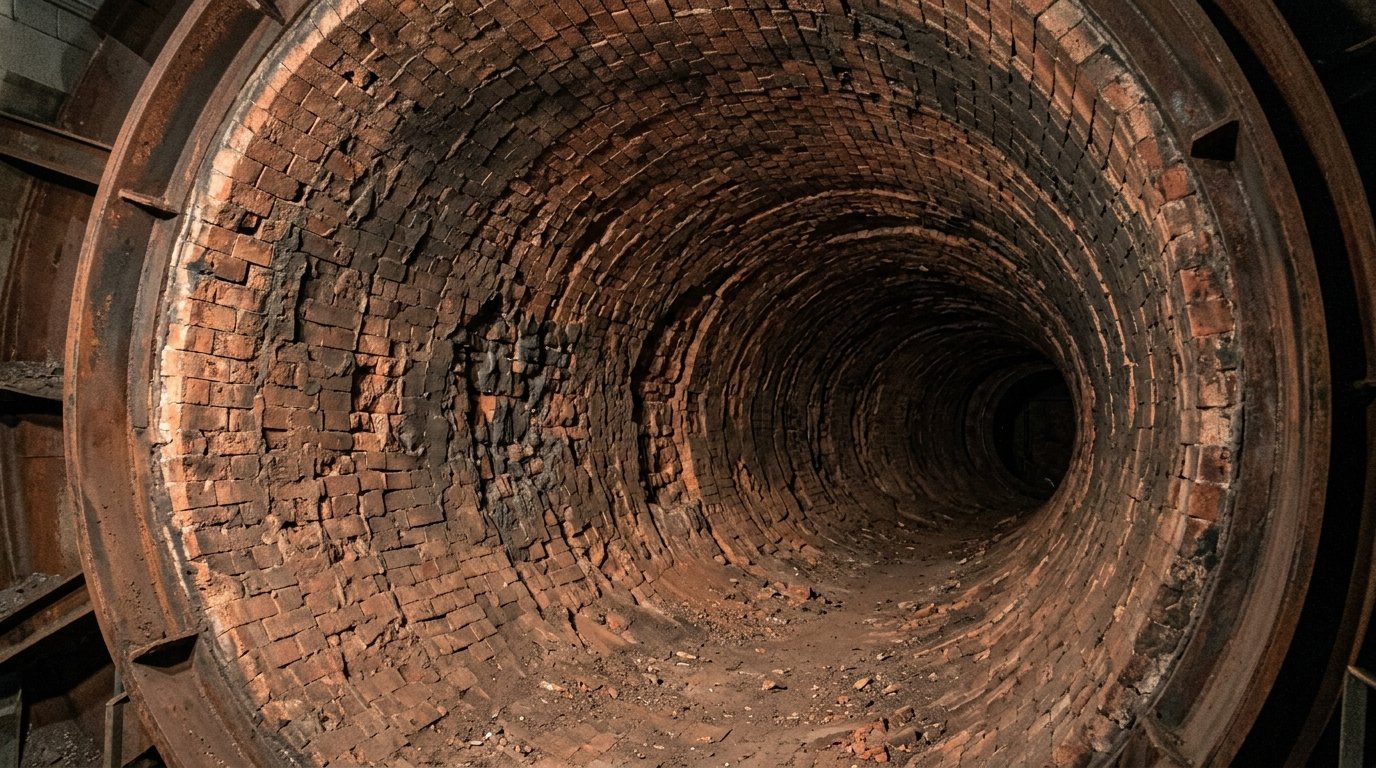
Interpretazione dei segnali di usura dei refrattari
L'usura del refrattario nei forni rotativi si manifesta sotto forma di punti caldi, perdita di rivestimento e scagliatura dei mattoni. Quattro meccanismi di usura, tabella diagnostica e criteri per il rifacimento del rivestimento.
L'usura del refrattario in un forno rotativo si manifesta attraverso quattro canali osservabili: aumento delle temperature del mantello del forno e punti caldi rilevati dallo scanner del mantello, perdita di clinker o di rivestimento di processo (coating), scagliatura visibile dei mattoni durante l'ispezione di fermata e deriva degli indicatori di processo, come l'aumento della contropressione del ventilatore ID o l'instabilità della temperatura nella zona di cottura. Una rilevazione precoce fa la differenza tra una sostituzione programmata del rivestimento e un arresto di emergenza. Una tipica zona di cottura di un forno da cemento opera a una temperatura di processo di circa 1.450 °C contro un mantello in acciaio che deve rimanere al di sotto dei 350-380 °C [1]. La parete di mattoni di circa 200-220 mm tra queste due temperature rappresenta l'unica barriera termica a protezione del mantello del forno [2].
I quattro meccanismi di usura
L'usura del refrattario nei forni rotativi è determinata da quattro meccanismi interagenti: attacco chimico, cicli termici, abrasione meccanica e infiltrazione di alcali o sali. Ognuno produce segnali distinti; nella pratica, la maggior parte dei cedimenti del rivestimento coinvolge più di un meccanismo.
Attacco chimico. Alle temperature della zona di cottura, il clinker fuso, il vapore di solfato e il flusso di scoria penetrano nei pori aperti e nei bordi dei grani del mattone. Ciò dissolve la fase legante, riduce la capacità di carico e rende la zona della faccia calda fragile e vetrosa. Nei forni da cemento, gli agenti chimici primari sono K₂O, Na₂O, SO₃ e Cl, le stesse specie volatili che guidano la formazione di anelli. L'attacco sul refrattario ad alto tenore di allumina provoca la densificazione dello strato superficiale, che indebolisce il legame e rende il mattone suscettibile allo shock termico [3].
Cicli termici. Ogni ciclo di avvio e arresto del forno impone un'escursione termica attraverso l'intero spessore del mattone. La faccia calda si espande; la faccia fredda è vincolata dal mantello in acciaio. I cicli ripetuti propagano micro-fessure parallele alla faccia calda. Uno strato di faccia calda già densificato dall'infiltrazione chimica ha un coefficiente di espansione termica diverso dalla massa non infiltrata; l'interfaccia tra loro diventa un piano di scagliatura [4].
Abrasione meccanica. Il clinker che rotola all'interno del forno in rotazione abrade continuamente la faccia calda, specialmente nella zona di alimentazione e nelle zone di transizione, dove il movimento della carica è più dinamico. Il disallineamento del forno amplifica le concentrazioni di sforzo locale in specifiche posizioni assiali, accelerando l'abrasione in tali zone [5].
Infiltrazione di alcali e sali. I sali volatili, principalmente K₂SO₄, KHSO₄ e KCl, condensano sulle superfici refrattarie più fredde durante il funzionamento. Il condensato infiltra la porosità aperta nel mattone, cristallizza e causa un'espansione volumetrica all'interno della matrice del mattone. Al ciclo termico successivo, la zona infiltrata si distacca. Questo fenomeno è definito "esplosione alcalina" (alkali bursting) ed è la modalità di cedimento dominante nelle zone dei cicloni del preriscaldatore e nei forni con elevato carico di cloruri da combustibili alternativi [3][6]. La stessa aria parassita che alimenta la formazione di anelli aumenta anche il ciclo dei volatili che guida l'infiltrazione alcalina: l'aumento di ossigeno nel flusso di gas intensifica la solfatazione dei vapori alcalini e aumenta i tassi di condensazione sulle superfici refrattarie fredde.
Tabella degli indicatori di usura e diagnostica
| Segnale di usura | Strumento / metodo | Cosa indica | Urgenza |
|---|---|---|---|
| Temperatura mantello >350 °C costante | Scanner mantello continuo | Assottigliamento mattoni, perdita di coating | Alta: indagare entro 24 h |
| Punto caldo mantello >380 °C | Scanner mantello continuo | Mattone vicino o sotto lo spessore minimo di sicurezza (~80 mm) | Critica: ridurre carico o pianificare sostituzione emergenza |
| Amperaggio motore forno in calo inatteso | Storico CCR | Coating perso, massa ridotta; mattone esposto | Media: verificare con scansione mantello |
| Contropressione ventilatore ID in aumento (nessuna variazione aria parassita) | DCS di processo | Restrizione flusso gas: anello o sporgenza rivestimento | Media: combinare con controllo trend amperaggio |
| Scolorimento esterno mantello rosso o arancione | Ispezione visiva o termocamera IR | Punto caldo localizzato; mattone mancante o molto sottile | Alta: controllo IR immediato |
| Frammenti di scagliatura mattoni nello scarico clinker | Ispezione refrigeratore | Cedimento attivo rivestimento al naso del forno o zona transizione | Alta: valutare zona alla prossima fermata |
| Perdita di coating in zona di cottura (fermata) | Ispezione visiva | Mattone nudo esposto alla temperatura di processo | Alta: misurare spessore residuo |
| Spessore mattone <35% originale | Calibro di fermata o ultrasuoni | Sotto il margine operativo di sicurezza | Critica: sostituire alla prima occasione |
Fonti: Guida alla gestione dei refrattari Oxmaint [1]; soglie di sostituzione del settore [7].
Lettura dell'output dello scanner del mantello
Uno scanner continuo del mantello è il principale strumento diagnostico in tempo reale per le condizioni del refrattario: un punto caldo o una temperatura del mantello superiore a 350 °C rappresentano il primo avviso operativo disponibile senza necessità di fermata [1]. Lo scanner produce un profilo di temperatura assiale dell'intera circonferenza del mantello, aggiornato continuamente. I punti caldi appaiono come picchi localizzati rispetto al profilo di base. Un aumento graduale in una zona assiale indica un assottigliamento progressivo; un picco netto può indicare un distacco del mattone (un vuoto tra mattone e mantello) piuttosto che un'usura generale.
Contesto per i valori soglia: il limite di progetto del mantello in acciaio del forno è tipicamente di 300-350 °C in funzionamento continuo. A 380 °C, lo spessore residuo del mattone sotto il punto caldo è probabilmente inferiore a 80 mm (rispetto a un originale di 200-220 mm) [1]. A quel punto, il gradiente termico attraverso il mattone rimanente è sufficientemente ripido da causare un rapido degrado ulteriore. Una temperatura del mantello che passa da 290 °C a 390 °C in 72 ore è un'emergenza; una temperatura che passa da 280 °C a 330 °C in sei settimane è un'opportunità di intervento programmato. Le letture mensili con pirometro portatile, ancora comuni in molti impianti, mancano completamente la finestra di deterioramento di 72 ore. La scansione continua colma questa lacuna.
Per la cadenza e l'ambito delle ispezioni periodiche delle guarnizioni e delle condizioni del refrattario, consultare cadenza e metodologia di ispezione delle guarnizioni del forno. Il servizio di manutenzione e ispezione copre la revisione della scansione del mantello come componente standard di un audit periodico del forno.
Ispezione di fermata: cosa cercare zona per zona
Una fermata programmata è l'unica opportunità per un'ispezione visiva e dimensionale diretta. Un protocollo zona per zona è essenziale.
Zona di cottura: misurare lo spessore del mattone in molteplici posizioni circonferenziali. Cercare la densificazione della faccia calda (una superficie vetrosa e dura dovuta all'infiltrazione chimica): le zone densificate sono ad alto rischio di scagliatura al ciclo termico successivo.
Zone di transizione: verificare la presenza di piani di scagliatura paralleli alla faccia calda. Battere le aree sospette con un martello; un suono vuoto indica delaminazione o formazione di vuoti.
Zona di alimentazione e naso del forno: ispezionare i giunti di malta per verificare aperture nella zona di alimentazione. Al naso, controllare il movimento e la distorsione dei mattoni dove i gradienti termici e lo stress meccanico sono massimi.
Dopo l'ispezione, le misurazioni dello spessore alimentano una mappa delle zone. Le zone sopra il 50% dello spessore continuano il servizio; le zone tra il 35-50% vengono inserite in un programma di sostituzione a breve termine; sotto il 35% sostituire prima della campagna successiva [7].
Cadenza di ispezione e decisione di sostituzione
La pratica cadenza di ispezione combina la scansione continua del mantello (tempo reale), la revisione trimestrale delle zone accessibili e una sostituzione annuale o biennale programmata dell'intero rivestimento della zona di cottura basata sul monitoraggio della durata della campagna [1][8].
| Zona | Soglia sostituzione programmata | Soglia emergenza |
|---|---|---|
| Zona di cottura | Sotto 50% spessore originale, o temp. mantello >300 °C | Sotto 35% spessore originale, o temp. mantello >380 °C |
| Zona di transizione | Sotto 55% spessore originale | Sotto 40% spessore originale |
| Preriscaldatore e calcinazione | Ispezione annuale, sostituzione per eccezione | Esplosione alcalina confermata o vuoto visibile |
Fonte: Gestione refrattari forno Oxmaint [7]; Guida Tecnica Highland Refractory 2026 [8].
La durata della campagna della zona di cottura per un forno da cemento ben gestito è di 12-18 mesi [1][8]. Gli impianti con livelli elevati di aria parassita, che accelerano il ciclo dei volatili che guida l'infiltrazione alcalina, e con elevato carico di cloruri da combustibili alternativi, vedono regolarmente le campagne ridursi a 8-10 mesi. Ridurre l'aria parassita alla guarnizione di ingresso del forno è uno degli interventi a più alto rendimento per estendere la vita utile del refrattario. Il monitoraggio dell'usura correlato sui componenti meccanici del forno, come i cerchi di rotolamento (tyres) e le fasce di rotolamento, è trattato in funzionamento e ispezione usura cerchi forno.
Dove le condizioni delle guarnizioni del forno incontrano la vita del refrattario
Una guarnizione di ingresso o uscita del forno degradata accelera l'usura del refrattario attraverso due vie: l'aria parassita elevata alimenta il ciclo dei volatili che guida l'infiltrazione alcalina, e l'instabilità della temperatura dovuta all'ingresso di aria parassita aumenta lo stress da cicli termici sulla faccia calda.
Negli audit condotti da Oswal, i forni con aria parassita legata alle guarnizioni superiore al 15% tra ingresso forno e ventilatore ID hanno mostrato durate della campagna della zona di cottura nella fascia bassa di 8-12 mesi, mentre i forni ben sigillati sotto l'8% hanno sostenuto campagne di 15-18 mesi con la stessa specifica di mattone. Un audit del forno che esamina l'integrità delle guarnizioni insieme ai dati di scansione del mantello fornisce un quadro più completo del rischio refrattario rispetto a ciascuna ispezione singola. Il servizio di manutenzione e ispezione copre entrambi come ambito combinato; il team di consulenza ingegneristica può modellare l'interazione aria parassita-campagna come parte di una valutazione dell'efficienza del forno.
Common questions about this topic
Un punto caldo sul mantello del forno si manifesta quando il rivestimento refrattario sottostante si è assottigliato oltre la soglia che consente di mantenere la temperatura del mantello entro il limite di progetto (tipicamente 300-350 °C). Le cause immediate sono l'usura dei mattoni per attacco chimico o abrasione, la perdita della crosta nella zona di cottura che espone il mattone nudo all'intera temperatura di processo di 1.450 °C, o lo sfaldamento da infiltrazione alcalina che crea un'intercapedine tra il mattone e il mantello. Una temperatura del mantello costantemente superiore a 380 °C in un punto localizzato indica che lo spessore residuo del mattone è probabilmente inferiore a 80 mm e richiede un intervento immediato: riduzione del carico, ciclo di raffreddamento controllato o riparazione d'emergenza [1][8].
Il refrattario della zona di cottura in un forno da cemento ben gestito ha solitamente una durata di 12-18 mesi per campagna. I rivestimenti della zona di transizione e del preriscaldatore durano più a lungo, spesso 2-5 anni tra gli interventi straordinari. La durata della campagna dipende dalle specifiche dei mattoni, dalla chimica di processo (carico di alcali, rapporto zolfo-alcali, cloruri derivanti da combustibili alternativi), dal numero di cicli termici (arresti non programmati all'anno) e dal livello di infiltrazioni d'aria all'ingresso del forno. Gli impianti con elevate infiltrazioni d'aria e un alto carico di cloruri da combustibili alternativi vedono regolarmente le campagne della zona di cottura ridursi a 8-10 mesi [1][8].
Sì, per la maggior parte dell'usura progressiva. Uno scanner a infrarossi continuo del mantello rileva gli aumenti di temperatura al di sopra del refrattario, fornendo un indicatore in tempo reale delle condizioni dei mattoni in ogni posizione assiale. L'aumento dell'amperaggio del comando del forno, i trend della contropressione del ventilatore ID e la deriva della temperatura dei gas di processo sono indicatori secondari leggibili dallo storico del CCR senza arrestare il forno. Gli eventi di caduta dei mattoni e lo sfaldamento sono confermabili solo durante l'arresto, ma lo scanner del mantello solitamente segnala il deterioramento prima che raggiunga uno stadio critico, a condizione che la frequenza di scansione sia sufficientemente elevata (continua, non manuale mensile) per cogliere la finestra di deterioramento di 72 ore [1]. Per il quadro di ispezione integrato, consultare cadenza e metodologia di ispezione delle tenute del forno.
Sources
- Oxmaint, "Cement Kiln Refractory Maintenance: Maximizing Lining Life."
- INFINITY for Cement Equipment, "Refractory Thickness in Rotary Kiln."
- HWI (Harbison-Walker), "Alkali attack as refractory wear mechanism," *International Cement Review*, May 2024
- Avesta Consulting, "Refractory Failure Troubleshooting."
- Xintai Refractory, "Cement Rotary Kiln Refractory Bricks: Selection Considerations."
- Hasle Refractories, "Minimize Refractory Challenges in Sustainable Cement Production," *Cement Energy Environment*, pp. 61-71
- Oxmaint, "Kiln Refractory Management: Lining Life Tracking with CMMS."
- Highland Refractory, "Refractory Service Life in Cement Rotary Kilns: 2026 Technical Guide."
- INFINITY for Cement Equipment, "Everything you need to know about Refractories in Cement Manufacturing."
- ResearchGate, "Failure of refractory brick lining cement kilns."
Articoli correlati
Discuss Your Sealing Requirements
Our engineering team can help identify the right sealing solution for your application.
Contact Engineering Team“Ovunque i forni rotanti ad alta temperatura operino in atmosfera controllata, i sistemi di tenuta Oswal garantiscono efficienza energetica e stabilità di processo.”