
Axial Compensation Seals
Reliable False Air Control Under Dynamic Axial Displacement
Rotary kilns are not fixed-length structures. During operation, thermal growth and load redistribution cause measurable axial displacement along the kiln axis. If not properly controlled, axial movement leads to seal interface distortion, progressive leakage, edge wear on sealing components, increased mechanical stress, and reduced sealing lifespan. These components are deployed across adaptive rotary kiln seal types to maintain sealing integrity under dynamic longitudinal movement.Engineering Outcome
“Adaptive longitudinal movement control. Stable sealing integrity. Reduced mechanical stress under thermal growth.”
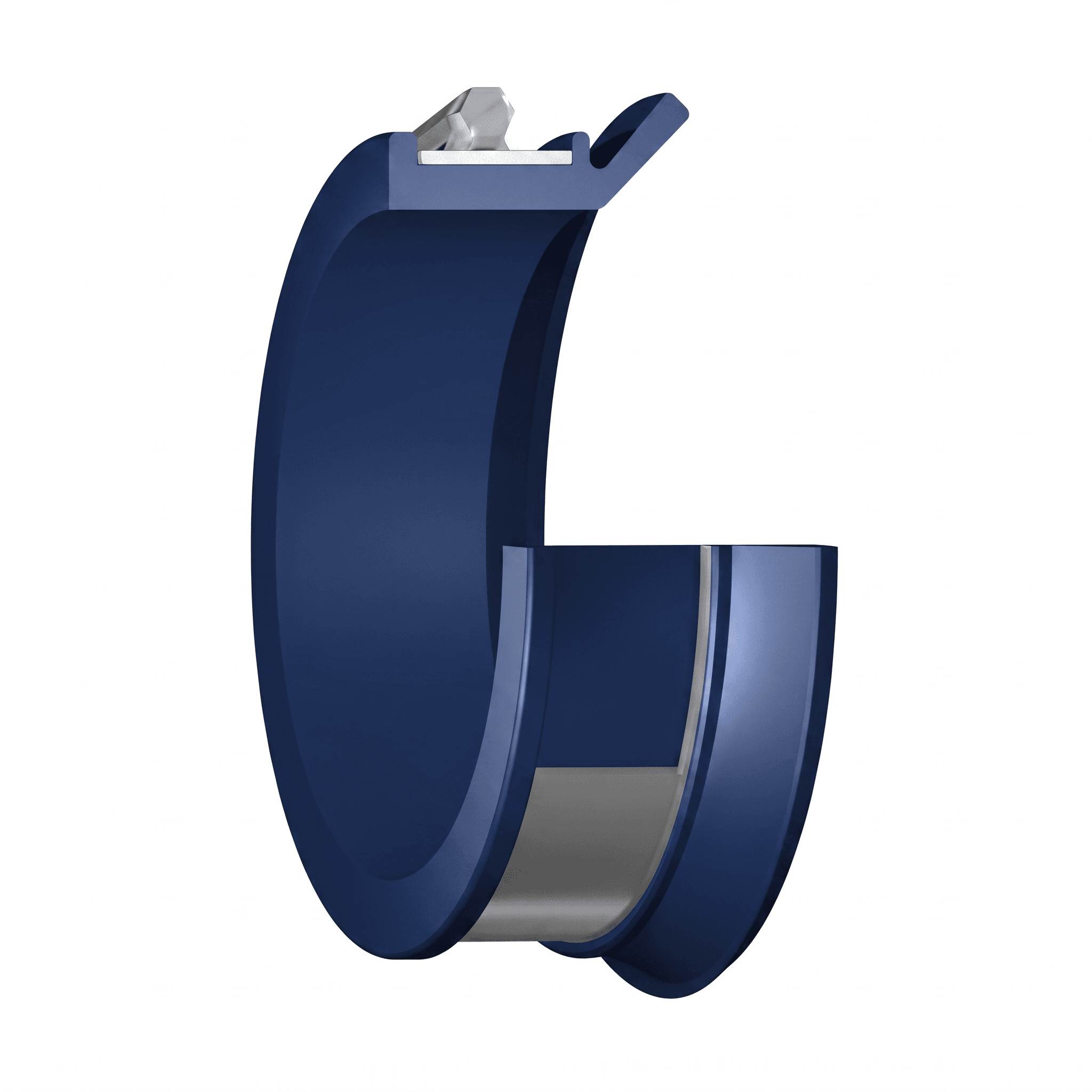
Sealing Through Thermal Growth and Axial Drift
Axial Compensation Seals are engineered to seal kiln interfaces under axial thermal growth and axial drift. A rotary kiln expands and contracts longitudinally as it heats and cools, and may drift axially during operation; the seal must maintain contact pressure while accommodating this movement. Oswal axial compensation seals use a spring-loaded design that follows the axial position of the kiln in real time.
Axial displacement occurs due to thermal expansion during heat-up, differential expansion between shell and support system, roller slope variations, load imbalance across stations, and operational condition changes. This movement is inherent to kiln operation and cannot be eliminated. It must be controlled and compensated.
Operating Conditions
- Thermal expansion during heat-up
- Differential expansion between shell and support
- Roller slope variations
- Load imbalance across stations
- Operational condition changes
Without Proper Sealing
- Seal interface distortion
- Progressive leakage
- Edge wear on sealing components
- Increased mechanical stress
- Reduced sealing lifespan
Oswal axial compensation seals are designed to accommodate kiln axial displacement within defined tolerances, maintain continuous sealing contact during movement, protect sealing elements from stress concentration, and prevent progressive leakage. The system must allow movement while maintaining pressure stability.
Three key engineering principles that define the Axial Compensation Seals:
Controlled longitudinal sliding
Even contact pressure distribution
Prevention of localized over-compression
Maintaining sealing alignment during displacement
Maintaining sealing alignment during displacement
High-temperature resistant sealing elements
High-temperature resistant sealing elements
Low-friction sliding surfaces
Low-friction sliding surfaces
Applicable Industries
Engineered for multiple sectors
Product Gallery
Explore detailed visuals of our high-quality kiln seals and manufacturing processes.
Engineering Performance
Plant-Level Impact
Built to Last
Stable leakage control
Consistent sealing geometry
Reduced wear progression
Long-term mechanical equilibrium
Technical Documentation
Axial Compensation Seals - Technical Datasheet
Oswal Kiln Seals - Full Product Catalog
Need custom technical documentation?
Our engineering team provides specification sheets, installation guides, and application-specific documentation on request.
Frequently Asked Questions
Common questions about the Axial Compensation Seals.
Axial Compensation Seals are designed to seal the kiln interfaces under axial thermal growth and axial drift. A rotary kiln expands and contracts longitudinally as it heats and cools, and may drift axially during operation; the seal must maintain contact pressure while accommodating this movement. Oswal axial compensation seals use a spring-loaded design that follows the axial position of the kiln in real time.
8-12 weeks for engineered axial compensation seals from order confirmation to delivery. Spare element delivery 4-8 weeks. Expedited delivery on request.
Yes. Axial compensation seals can be retrofitted as part of an inlet, outlet, or radial seal upgrade. Installation window depends on the interface; typically combined with an adjacent seal install rather than installed standalone.
Talk to Our Engineers
Discuss Your Sealing Requirements
Our engineering team will identify the optimal sealing solution for your specific kiln configuration and operating conditions.