
Kiln Inlet Sealing System
Precision Draft Control and Fuel Optimization
The kiln inlet is one of the most critical sealing interfaces in the pyroprocessing system (often compared alongside outlet designs in kiln inlet vs outlet seals). It is directly connected to the calcination zone, combustion dynamics, and upstream process stability. False air ingress at the inlet disrupts temperature control, affects flame behavior, increases fuel demand, and destabilizes draft balance. Oswal Engineers designs these components for various rotary kiln seal types to ensure combustion stability and controlled air management under dynamic kiln movement.Engineering Outcome
“Controlled air ingress. Stable combustion profile. Optimized thermal efficiency.”
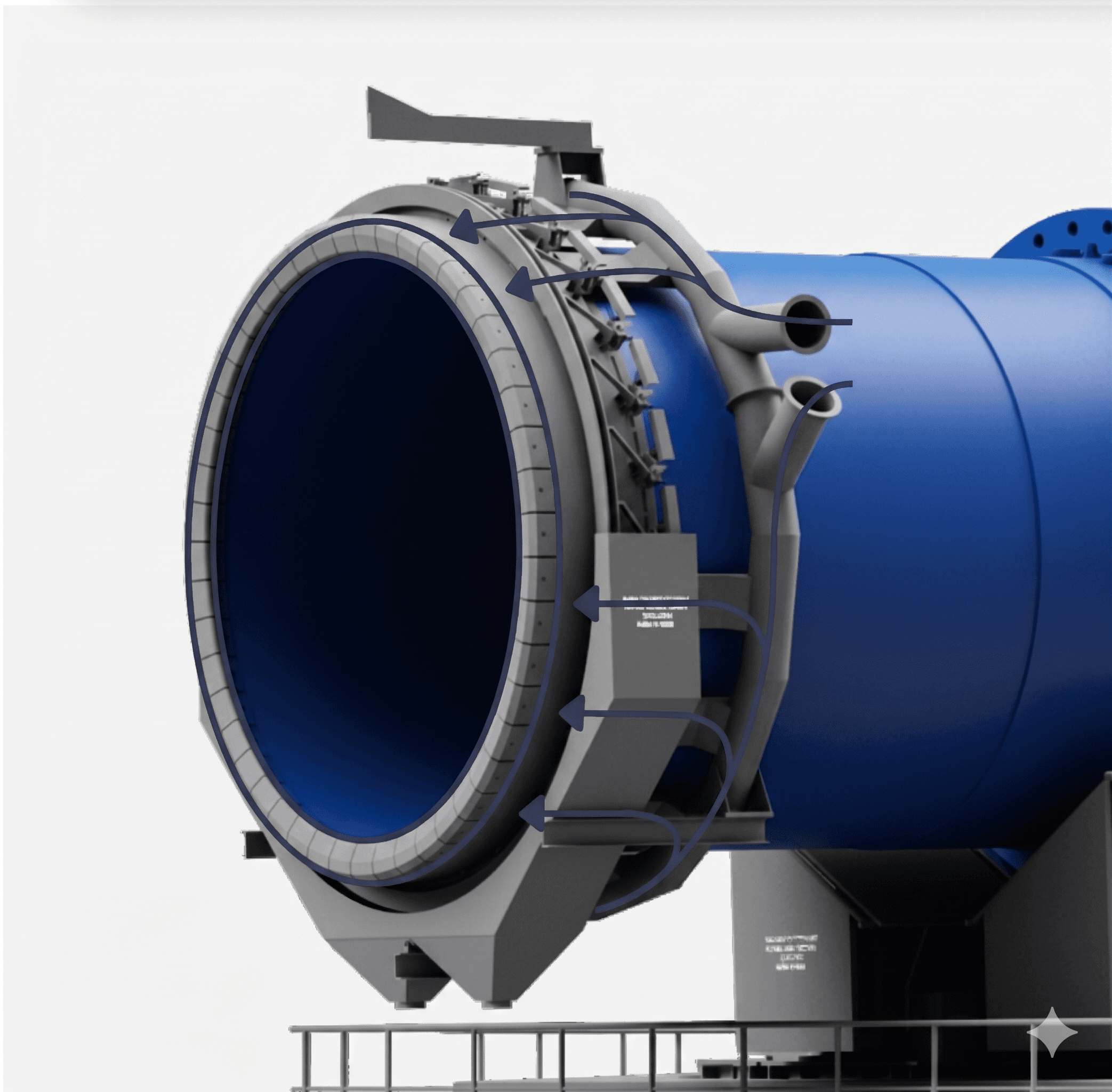
Draft Control at the Riser-Duct Interface
The Kiln Inlet Sealing System seals the interface between the rotary kiln and the calciner riser duct at the kiln inlet. This is one of the most leakage-prone interfaces on a cement kiln line: the inlet operates at high temperature with significant pressure differential against the riser, making it a primary source of false air ingress. The Oswal kiln inlet seal provides draft control and false air reduction at this interface.
The kiln inlet operates under combined stress conditions. Even minor air leakage at this zone results in significant process disruption. Effective inlet sealing is fundamental to fuel optimization.
Operating Conditions
- High process temperatures
- Continuous axial displacement
- Radial shell expansion
- Shell ovality
- Heavy dust loading
- Draft pressure fluctuations
Without Proper Sealing
- Flame distortion
- Inconsistent calcination
- Increased fuel consumption
- ID fan overload
- Reduced thermal efficiency
Oswal inlet sealing systems are engineered for axial movement compensation, radial expansion adaptation, controlled sealing pressure distribution, and long-term wear resistance. The sealing mechanism maintains continuous contact without excessive friction or structural stress.
Three key engineering principles that define the Kiln Inlet Sealing System:
Axial movement compensation within defined tolerances
Radial expansion adaptation during operation
Controlled sealing pressure distribution
Long-term wear resistance
Long-term wear resistance
Dynamic sealing performance rather than rigid constraint
Dynamic sealing performance rather than rigid constraint
Retrofit Compatibility
Oswal inlet sealing systems can be engineered for existing kiln geometries, various inlet hood configurations, different kiln diameters, and dry and preheater-precalciner systems.
Applicable Industries
Engineered for multiple sectors
Product Gallery
Explore detailed visuals of our high-quality kiln seals and manufacturing processes.
Engineering Performance
Plant-Level Impact
Built to Last
Reduced maintenance intervention
Lower operational variability
Improved refractory durability
Extended production continuity
Technical Documentation
Kiln Inlet Sealing System - Technical Datasheet
Oswal Kiln Seals - Full Product Catalog
Need custom technical documentation?
Our engineering team provides specification sheets, installation guides, and application-specific documentation on request.
Frequently Asked Questions
Common questions about the Kiln Inlet Sealing System.
The Kiln Inlet Sealing System seals the interface between the rotary kiln and the calciner riser duct at the kiln inlet. This is one of the most leakage-prone interfaces on a cement kiln line: the inlet operates at high temperature with significant pressure differential against the riser, making it a primary source of false air ingress. The Oswal kiln inlet seal provides draft control and false air reduction at this interface.
8-12 weeks for engineered kiln inlet sealing systems from order confirmation to delivery. Spare wear elements have shorter lead times, generally 4-6 weeks. Expedited delivery available for urgent shutdown windows.
Yes. The kiln inlet sealing system is designed for retrofit on existing kilns. Installation typically requires a 5-7 day window in a scheduled shutdown. A pre-install dimensional survey confirms fit and identifies any interface adjustments.
Talk to Our Engineers
Discuss Your Sealing Requirements
Our engineering team will identify the optimal sealing solution for your specific kiln configuration and operating conditions.