
Graphite Kiln Seal
Long-Term False Air Control in High-Temperature Clinker Production
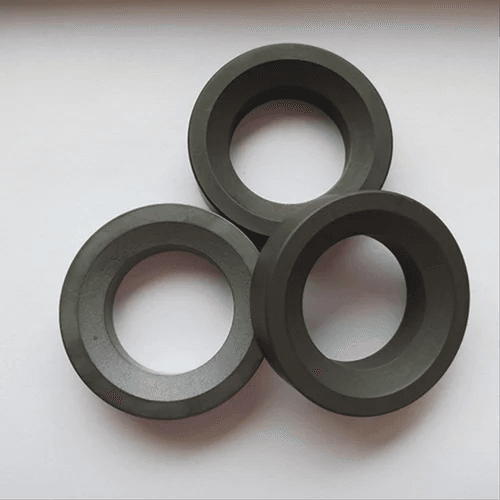
Graphite-based sealing elements are critical components in high-temperature graphite kiln seals. They operate in zones exposed to extreme thermal load, abrasive dust, and continuous rotational movement. In such environments, sealing performance depends on material stability, friction control, and structural resilience. Oswal Engineers designs these components for various rotary kiln seal types to ensure durability and consistent sealing integrity in high thermal zones of cement kilns.Engineering Outcome
“High-temperature resistance. Stable friction control. Durable sealing performance in extreme thermal zones.”
Why Graphite: Wear, Conductivity, Thermal Resilience
Graphite-Based Sealing Elements are the contact-sealing components used in graphite-only Oswal kiln seals and as the secondary sealing stage in the Duplex hybrid design. Graphite is selected for kiln sealing because of its thermal resilience (stable performance to high temperature without significant degradation), self-lubricating wear behaviour, and resistance to thermal shock. Graphite elements provide a tight seal under steady-state kiln operation and are replaced periodically as a wear part. In the Duplex architecture, they sit downstream of the lamella stage that absorbs shell motion, which extends graphite life materially compared to a graphite-only seal exposed to the full range of kiln movement.
Graphite sealing elements operate under elevated surface temperatures, continuous circumferential contact with rotating shell, abrasive clinker and raw meal dust, cyclic thermal expansion, and variable draft pressure. Material performance must remain stable under prolonged high-temperature exposure.
Operating Conditions
- Elevated surface temperatures
- Continuous circumferential contact with rotating shell
- Abrasive clinker and raw meal dust
- Cyclic thermal expansion
- Variable draft pressure
Graphite is selected for its high-temperature resistance, stable dimensional behavior under heat, controlled friction coefficient, thermal shock tolerance, and chemical inertness. Oswal graphite elements are engineered using optimized graphite grades to ensure structural consistency and wear resistance.
Three key engineering principles that define the Graphite Kiln Seal:
High-temperature resistance
Stable dimensional behavior under heat
Controlled friction coefficient
Thermal shock tolerance
Thermal shock tolerance
Chemical inertness
Chemical inertness
Precision surface finishing
Precision surface finishing for consistent performance
Applicable Industries
Engineered for multiple sectors
Product Gallery
Explore detailed visuals of our high-quality kiln seals and manufacturing processes.
Engineering Performance
Plant-Level Impact
Built to Last
Gradual and predictable wear progression
Easy replacement during scheduled maintenance
Consistent sealing pressure throughout operational life
Long-term durability in abrasive environments
Technical Documentation
Graphite Kiln Seal - Technical Datasheet
Oswal Kiln Seals - Full Product Catalog
Need custom technical documentation?
Our engineering team provides specification sheets, installation guides, and application-specific documentation on request.
Frequently Asked Questions
Common questions about the Graphite Kiln Seal.
Graphite-Based Sealing Elements are the contact-sealing components used in graphite-only Oswal kiln seals and as the secondary sealing stage in the Duplex hybrid design. Graphite is selected for kiln sealing because of its thermal resilience (stable performance to high temperature), self-lubricating wear behaviour, and resistance to thermal shock. Graphite elements provide a tight seal under steady-state kiln operation.
6-10 weeks for graphite sealing element sets from order confirmation to delivery. Replacement element-only orders 4-6 weeks. Expedited delivery on request.
Yes. Graphite sealing elements are designed as replaceable components within Oswal sealing systems. They can also be retrofitted into compatible third-party seal hardware on a case-by-case basis (engineering review required to confirm geometry and material compatibility).
Talk to Our Engineers
Discuss Your Sealing Requirements
Our engineering team will identify the optimal sealing solution for your specific kiln configuration and operating conditions.