
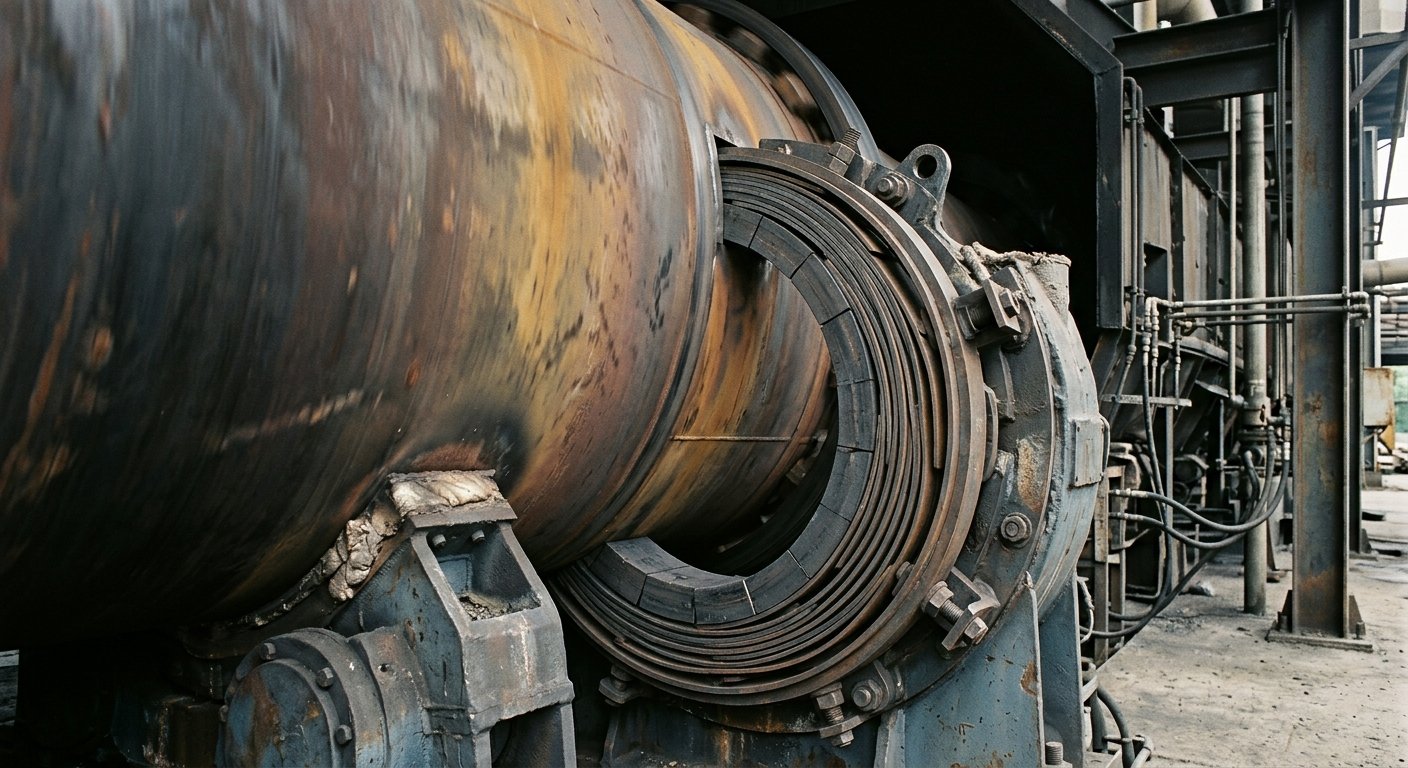
Spiegazione della tenuta per forno duplex: funzionamento del sistema ibrido a doppio stadio
Una tenuta duplex per forni rotanti abbina uno stadio di movimento a lamelle a uno stadio termico in grafite. Ecco come il sistema ibrido a doppio stadio controlla le infiltrazioni d'aria parassita in presenza di movimenti reali del forno.
Una tenuta duplex per forno rotante è una tenuta ibrida a doppio stadio che combina uno stadio primario a lamelle per compensare il movimento e l'ovalizzazione con uno stadio secondario in grafite per la tenuta termica ad alta temperatura; in questo modo, un singolo assieme è in grado sia di seguire il movimento del mantello del forno, sia di mantenere una tenuta ermetica contro le infiltrazioni di aria parassita. Tale soluzione esiste perché un forno rotante non è mai statico: presenta spostamenti assiali, dilatazioni radiali dovute al calore e rotazioni fuori centro (ovalizzazione), e nessun principio di tenuta singolo è in grado di gestire tutte queste variabili resistendo al contempo alle temperature di scarico del clinker. Questo documento illustra cos'è una tenuta duplex per forno, il problema che una tenuta singola non può risolvere, come i due stadi si ripartiscono il carico, perché la soluzione ibrida è vincente, come viene eseguito il retrofit e da dove deriva il ritorno sull'investimento.
Cos'è una tenuta duplex (a doppio stadio) per forno?
Una tenuta duplex per forno è un assieme di tenuta a due stadi: uno stadio primario a lamelle assorbe il movimento meccanico del forno, mentre uno stadio secondario in grafite mantiene un contatto di tenuta continuo ad alta temperatura. I due stadi sono alloggiati in un unico corpo all'interfaccia tra il forno e la cappa, lavorando in sinergia affinché la tenuta si adatti al forno anziché opporvisi.
Tenuta duplex per forno: una tenuta ibrida a doppio stadio in cui uno stadio primario a lamelle (in acciaio armonico) compensa i movimenti assiali, radiali e di ovalizzazione, e uno stadio secondario in grafite mantiene un contatto di tenuta continuo ad alta temperatura, combinando entrambi i principi in un unico assieme adattivo.
Nella pratica, i termini sono intercambiabili. Una tenuta duplex per forno è la stessa cosa di una tenuta doppia, una tenuta a doppio stadio, una tenuta a doppio strato o una tenuta ibrida: tutti questi termini descrivono una tenuta costruita con due stadi cooperanti anziché basata su un unico principio di tenuta. Il nome commerciale del prodotto Oswal è Sistema di tenuta duplex per forno.
Una precisazione, dato che il termine "duplex" è molto utilizzato: si tratta di una tenuta per forno rotante a doppio stadio. Non si riferisce all'acciaio inossidabile duplex (una classe di acciaio), né a un appartamento duplex, né a una tenuta meccanica duplex per pompe o compressori. Tutto ciò che segue riguarda la tenuta all'interfaccia dove un forno rotante per cemento, calce o lavorazione di minerali incontra la cappa di ingresso o di uscita stazionaria.
Il problema che una tenuta singola non può risolvere
Una tenuta per forno a stadio singolo non può svolgere due compiti opposti contemporaneamente: seguire un mantello del forno che si muove assialmente e ruota fuori centro e, allo stesso tempo, mantenere una tenuta termica ermetica contro l'aria parassita alle temperature di scarico del clinker. I due requisiti agiscono in direzioni opposte, pertanto una tenuta basata su un unico principio risulta sempre compromessa su uno dei due fronti.
Un forno rotante presenta quattro variabili dinamiche che agiscono simultaneamente su qualsiasi tenuta, secondo il catalogo Duplex di Oswal [1]:
- Spostamento assiale. Il mantello si sposta avanti e indietro lungo il suo asse durante le fasi di riscaldamento, raffreddamento e carico.
- Dilatazione radiale del mantello. L'acciaio si espande verso l'esterno con la temperatura, aprendo o chiudendo lo spazio verso la tenuta.
- Dilatazione termica. Espansione e contrazione continue durante il ciclo operativo.
- Ovalizzazione del mantello. Il mantello si flette perdendo la forma circolare durante la rotazione, specialmente in prossimità dei cerchi di rotolamento.
Ovalizzazione: la deformazione ciclica fuori centro del mantello di un forno rotante durante la rotazione sotto il proprio peso e carico, per cui la sezione trasversale si flette tra una forma leggermente ovale e una circolare a ogni giro. È uno dei movimenti più difficili da compensare per una tenuta.
Le tenute convenzionali sono progettate per condizioni statiche, mentre un forno opera in continuo movimento; questo disallineamento è ciò che causa il cedimento della tenuta e l'ingresso di aria parassita [1]. L'elevata temperatura operativa espande il mantello, mentre il suo peso e il carico ne distorcono la forma circolare, rendendo quasi impossibile mantenere una tenuta statica perfetta [2]. Pertanto, il settore utilizza uno dei due principi, ciascuno dei quali presenta un limite intrinseco [3]:
- Una tenuta a lamelle (lamelle sovrapposte in acciaio armonico) si adatta bene al movimento, ma l'acciaio armonico perde la tempra e le lamelle si usurano più rapidamente nelle zone più calde e abrasive.
- Una tenuta in grafite (blocchi di grafite segmentati) è termicamente durevole e si usura lentamente in presenza di polvere, ma gestisce le escursioni di movimento ampie e rapide in modo meno efficace rispetto a un pacco lamellare flessibile.
Se si costringe una lamella a resistere a un calore estremo prolungato, o si costringe la grafite ad assorbire ampi movimenti, la tenuta singola perde. Tale perdita è aria parassita nei forni da cemento, ed è misurabile e costosa; il compromesso completo è descritto in tenuta a lamelle vs grafite per forni, e il metodo di misurazione in come viene misurata l'aria parassita.
Come i due stadi si ripartiscono il carico
In una tenuta duplex per forno, i due stadi si dividono il carico di lavoro: lo stadio a lamelle gestisce tutti i movimenti (deriva assiale, dilatazione radiale, ovalizzazione) in modo che lo stadio in grafite possa rimanere in costante contatto ad alta temperatura e svolgere l'effettiva funzione di tenuta termica e contro le polveri. Lo strato di lamelle assorbe le variazioni di movimento; lo strato di grafite garantisce prestazioni di tenuta termica costanti [3]. A nessuno dei due stadi viene richiesto di svolgere il compito per cui non è adatto.
L'assieme è costruito con quattro parti cooperanti, secondo l'architettura di progettazione meccanica di Oswal [1][3]:
| Componente | Ruolo dello stadio | Funzione | Fonte |
|---|---|---|---|
| Interfaccia primaria a lamelle | Compensazione del movimento | Si flette con la deriva assiale, la dilatazione radiale e l'ovalizzazione del mantello, permettendo alla tenuta di seguire il mantello in movimento | PDF Oswal [1][3] |
| Interfaccia secondaria in grafite | Tenuta termica | Mantiene un contatto di tenuta continuo ad alta temperatura e sigilla contro la polvere all'interfaccia | PDF Oswal [1][3] |
| Alloggiamento strutturale | Montaggio stabile | Alloggiamento per impieghi gravosi che mantiene entrambi gli stadi in posizione sotto carico | PDF Oswal [1][3] |
| Meccanismo di distribuzione della pressione controllata | Contatto uniforme | Mantiene la pressione di tenuta uniforme lungo l'interfaccia mentre il forno si distorce | PDF Oswal [1][3] |
Poiché lo stadio a lamelle assorbe le escursioni meccaniche, lo stadio in grafite non deve mai inseguire un target di movimento ampio: rimane in contatto stretto e costante, mantenendo la tenuta termica. Oswal costruisce le due interfacce partendo dalle stesse famiglie fornite come elementi indipendenti, elementi di tenuta a lamelle e elementi di tenuta in grafite, combinandoli qui in un unico assieme a doppio strato con continuità di tenuta su tutta la lunghezza e senza zone morte [1].
Perché l'ibrido supera la tenuta singola
La soluzione ibrida supera la tenuta singola perché non costringe mai un materiale a svolgere un lavoro per cui non è adatto: il movimento viene assorbito dal pacco lamellare e il calore viene trattenuto dalla grafite, in modo che la pressione di tenuta rimanga uniforme lungo l'interfaccia anche quando il forno si distorce. La configurazione a doppio strato crea inoltre una ridondanza e un'affidabilità che un singolo principio non può offrire [3].
Il contrasto è più evidente se analizzato comparativamente.
| Sfida | Solo lamelle | Solo grafite | Duplex (doppio stadio) |
|---|---|---|---|
| Movimento assiale + radiale | Segue bene | Meno efficace con ampie escursioni | Lo stadio a lamelle lo assorbe [1][3] |
| Ovalizzazione del mantello | Si flette con esso | Limitato | Lo stadio a lamelle si flette con esso [1] |
| Temperatura estrema prolungata | L'acciaio armonico perde la tempra | Resistente | Lo stadio in grafite la sostiene [3] |
| Polvere abrasiva sulla superficie | Le lamelle si erodono più velocemente | Lunga durata | Lo stadio in grafite la gestisce [1][3] |
| Pressione di tenuta uniforme sotto distorsione | Si degrada al rilassarsi delle lamelle | Buona, se il movimento è ridotto | Mantenuta lungo l'interfaccia [1] |
L'avvertenza onesta: una tenuta duplex non è la risposta automatica per ogni posizione. Un ingresso del forno dominato dal movimento, dove il carico termico è elevato ma non estremo come all'uscita, può essere ben servito da una tenuta a lamelle singola, e un retrofit attento ai costi potrebbe non giustificare un assieme a doppio strato laddove un singolo principio sarebbe sufficiente. La duplex si guadagna il suo posto dove una posizione è effettivamente soggetta sia a forti movimenti che a calore estremo, ovvero esattamente dove una tenuta singola è costretta a scendere a compromessi. Per una valutazione completa, consultare le nostre guide sulla scelta di una tenuta per forno e su tenute per forno singole vs doppie.
Retrofit e installazione durante il fermo impianto
Una tenuta duplex per forno è compatibile con il retrofit: si integra con la geometria esistente del mantello del forno, la configurazione della stazione di supporto, i sistemi di spinta assiale e le interfacce delle cappe di ingresso e uscita senza eccessive modifiche strutturali [3]. Il suo design modulare è concepito per l'installazione e la manutenzione su un forno esistente, non solo per i nuovi impianti [1].
Questa compatibilità di retrofit è ciò che permette di mantenere l'installazione entro i tempi di un fermo programmato. La tenuta viene solitamente montata durante un fermo forno programmato, con una finestra di installazione di circa 9 giorni per un assieme completo a doppio stadio su un forno esistente; si consideri questo come un tipico periodo di fermo programmato da verificare con il proprio piano di manutenzione, non come una garanzia fissa. (Il conteggio dei giorni deriva dalla pratica di installazione di Oswal, non da un dato di catalogo pubblicato; il catalogo documenta la compatibilità del retrofit e il design modulare). Poiché l'assieme si monta sulle interfacce esistenti, il lavoro si concentra sull'area della tenuta piuttosto che sulla rielaborazione della cappa o delle stazioni di supporto. La sequenza in loco è gestita dal team di installazione e retrofit di Oswal, con la pianificazione generale descritta in retrofit e fermo impianto per tenute forno.
Il ritorno sull'investimento: dall'aria parassita al combustibile e alla potenza del ventilatore ID
Il ritorno sull'investimento di una tenuta duplex per forno deriva dalla riduzione dell'aria parassita, che abbassa il consumo di combustibile, riduce la potenza del ventilatore a tiraggio indotto (ID) e stabilizza il processo; il catalogo Duplex di Oswal indica un ritorno tipico da 6 a 18 mesi grazie a questi tre fattori [1]. Il meccanismo è diretto: ogni metro cubo di aria non intenzionale che entra nel sistema deve essere riscaldato alla temperatura di processo e il ventilatore ID deve movimentarlo, quindi la perdita si traduce sia in spreco di combustibile che in spreco di potenza del ventilatore [3].
L'entità di tale penalità è ben documentata nella letteratura sul cemento, indipendentemente dal fornitore. Come dato industriale generale (non una specifica di prodotto Oswal), ogni punto percentuale di aria parassita oltre l'ottimale costa circa 1,5-2,5 kcal/kg di clinker in combustibile aggiuntivo [4][5], e le tenute di ingresso e uscita del forno sono tra i principali punti di ingresso sulla linea del forno [6]. Ridurre l'aria parassita legata alla tenuta agisce quindi su uno degli elementi a più alto impatto nel bilancio energetico dell'impianto.
Un esempio pratico, utilizzando dati tipici di terze parti anziché risultati garantiti: si prenda un forno da 5.000 t/giorno. Ridurre l'aria parassita del 3% alle tenute, a circa 2 kcal/kg di clinker per punto, consente un risparmio di circa 6 kcal/kg di clinker, che su 5.000 t/giorno equivale a circa 30 milioni di kcal/giorno di energia termica non più sprecata, oltre a un minor carico del ventilatore ID dovuto alla movimentazione di meno aria parassita. La cifra esatta dipende dall'aria parassita di base del forno, dal prezzo del combustibile e dal carico; il calcolo è guidato da input misurabili, non da affermazioni di marketing. Il ritorno di 6-18 mesi indicato dal catalogo è un intervallo dichiarato dal fornitore: validarlo rispetto al bilancio energetico del proprio forno prima dell'acquisto.
Ecco perché la scelta della tenuta è alla base di molte decisioni energetiche negli impianti di cemento. Su un forno dove l'aria parassita è elevata, la tenuta è uno degli interventi meno costosi che incide sul consumo specifico di combustibile.
Se state valutando una tenuta duplex per una specifica posizione del forno, il nostro team tecnico analizzerà il profilo di movimento e termico dell'ingresso e dell'uscita caso per caso, associando ciascuno a una tenuta singola o a un ibrido a doppio stadio. Contattateci con i dati di processo e l'aria parassita di base del vostro forno.
Common questions about this topic
A duplex kiln seal combines two sealing principles in a single architecture: spring-loaded lamella elements for adaptive compliance to kiln motion, and graphite-based contact sealing for residual leakage control. The two principles work in series. The lamella section absorbs kiln motion and ovality; the graphite section provides the tight final seal against false air. Oswal's Duplex Kiln Sealing System is the flagship implementation of this design.
Lamella is preferred when the kiln has significant motion (large diameter kilns, pronounced ovality, axial drift) and the operating temperature is moderate. Graphite is preferred when the kiln is dimensionally stable and the operating temperature is at the high end of the kiln range. The Duplex hybrid combines both, which is why it outperforms either single-principle system under real-world kiln operating conditions. For specific plant selection guidance, the Oswal Engineering Consulting & Audit service is the right starting point.
Yes. The Duplex is engineered for retrofit installation on existing rotary kilns without structural modification of the kiln shell or hood. Typical retrofit install is approximately 9 days during a scheduled kiln shutdown. A pre-install dimensional survey confirms fit and identifies any interface adjustments needed before equipment ships.
Una tenuta duplex per forno rotante è una tenuta ibrida a doppio stadio che combina uno stadio primario a lamelle (in acciaio armonico) per la compensazione dei movimenti e dell'ovalizzazione, con uno stadio secondario in grafite per la tenuta termica ad alta temperatura; in questo modo, un unico assieme è in grado sia di seguire il mantello del forno in movimento, sia di mantenere una tenuta ermetica contro le infiltrazioni d'aria parassita [1][3]. Si tratta della configurazione alla base del sistema di tenuta duplex per forni rotanti di Oswal; i termini tenuta doppia per forno, tenuta a doppio stadio per forno e tenuta ibrida per forno si riferiscono tutti al medesimo approccio a due stadi.
Una tenuta per forno rotante a stadio singolo utilizza un unico principio, ovvero un pacco lamellare o un anello in blocchi di grafite, e deve scendere a compromessi quando una posizione richiede sia la compensazione del movimento che la resistenza a temperature estreme; una tenuta per forno rotante duplex utilizza due stadi, in modo che la lamella gestisca il movimento e la grafite il calore, senza che a nessuno dei due venga richiesto di svolgere un compito per il quale non è adatto [3]. I due principi singoli sono messi a confronto in lamella vs grafite per tenute di forni rotanti, mentre il confronto diretto è disponibile in tenute per forni rotanti a stadio singolo vs doppio.
Sì. Una tenuta duplex per forno rotativo è progettata per il retrofit e si integra con il mantello del forno esistente, le stazioni di supporto, i sistemi di spinta assiale e le interfacce della cappa senza richiedere eccessive modifiche strutturali, e viene installata durante un fermo impianto programmato [1][3]. Il team di installazione e retrofit di Oswal gestisce le attività in loco, mentre la pianificazione del fermo è descritta in dettaglio in retrofit della tenuta del forno e fermo impianto.
Il catalogo Duplex di Oswal indica un tempo di rientro dell'investimento tipico compreso tra 6 e 18 mesi, determinato dalla riduzione del consumo di combustibile, dal minor assorbimento di potenza del ventilatore ID e da una maggiore stabilità del processo [1]. Si tratta di un intervallo dichiarato dal fornitore: il rientro effettivo dipende dal livello di aria parassita di base del forno, dal costo del combustibile e dal carico; pertanto, deve essere validato rispetto alla baseline energetica dell'impianto prima dell'acquisto.
Sources
- Oswal Engineers, *Duplex Kiln Sealing System* (catalogue: engineering concept, mechanical design architecture, false air control performance, rapid payback period). `KilnSeal_DuplexType_OK_CAT.pdf`
- Kintek Furnace, *Why Does the Rotary Kiln / Lime Kiln Have Poor Sealing Performance, and What Are the Consequences?*
- Oswal Engineers, *Kiln Sealing Systems* (product catalogue: Duplex hybrid lamella + graphite technology, engineering background, operational integration). `OSWAL_kilnseal.pdf`
- European Cement Research Academy (ECRA) / Cembureau, *Best Available Techniques and energy efficiency in cement manufacture* (false air and specific fuel consumption). As cited in our [false air cornerstone](/en/blog/understanding-false-air-in-cement-kilns).
- VDZ (Verein Deutscher Zementwerke), *Environmental Data of the German Cement Industry* (kiln gas balance and false air). As cited in our [false air cornerstone](/en/blog/understanding-false-air-in-cement-kilns).
- Oxmaint, *Kiln Inlet and Outlet Seal Maintenance for Cement Plants*
Articoli correlati
Discuss Your Sealing Requirements
Our engineering team can help identify the right sealing solution for your application.
Contact Engineering Team“Ovunque i forni rotanti ad alta temperatura operino in atmosfera controllata, i sistemi di tenuta Oswal garantiscono efficienza energetica e stabilità di processo.”